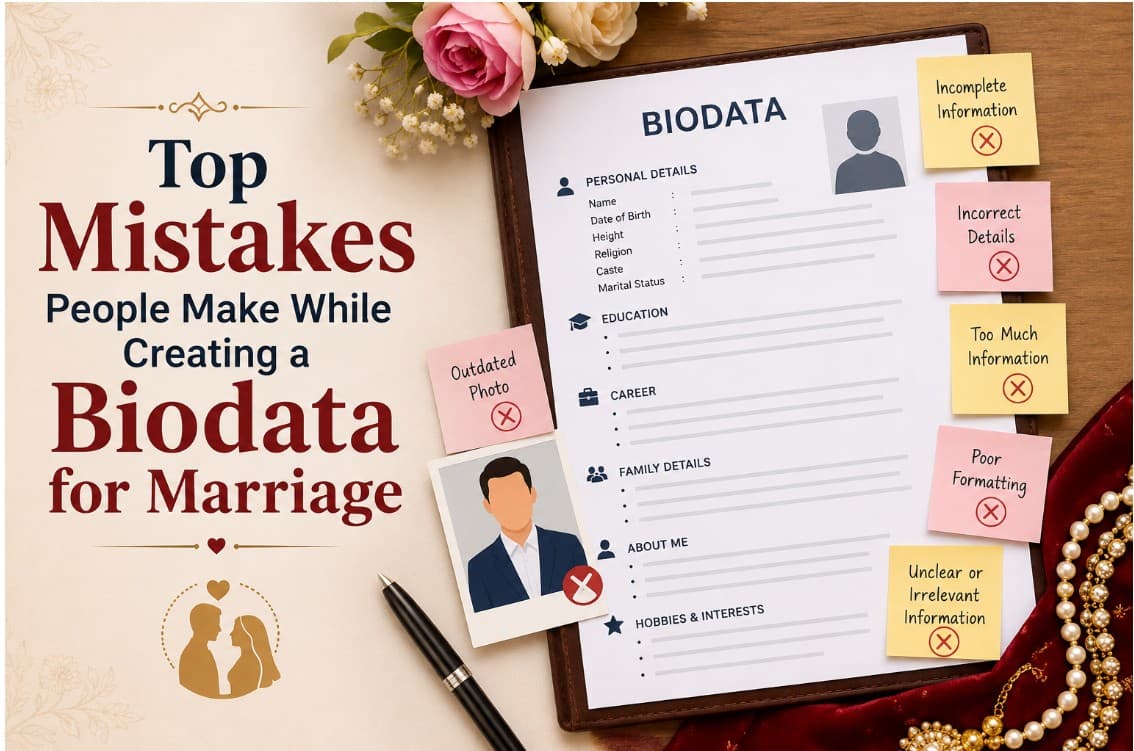
Creating a marriage biodata may seem simple, but small mistakes can significantly affect the quality of matches you receive. Incomplete information, poor formatting, outdated photos, unrealistic expectations, or overly generic descriptions can make it difficult for potential partners and families to understand who you truly are.
A marriage biodata is more than a collection of personal details. It is a snapshot of your background, values, lifestyle, and future aspirations. When created thoughtfully, it helps attract compatible matches and builds trust from the very beginning.
In this guide, you'll discover the most common biodata mistakes people make, why they matter, and how you can avoid them to create a profile that is clear, authentic, and genuinely effective.
Why Your Marriage Biodata Matters More Than You Think
One of the biggest misconceptions is believing that a biodata is merely a formality. In reality, it often acts as the first filter in the matchmaking process.
Unlike a job resume, which focuses primarily on qualifications and professional achievements, a marriage biodata must present a complete picture of who you are as a person. It should communicate not only what you do, but also how you live, what you value, and what kind of future you hope to build with a partner.
A strong biodata helps:
- Build trust from the beginning
- Save time by attracting compatible matches
- Reduce misunderstandings later in the process
- Present your personality beyond basic demographics
- Create a positive first impression for both individuals and families
When these objectives are overlooked, common mistakes begin to appear. Explore free templates
A Quick Overview of the Most Common Mistakes
| Category | Common Issues |
|---|---|
| Mindset Mistakes | Treating biodata like a resume, focusing only on achievements |
| Information Mistakes | Missing details, incomplete sections, outdated information |
| Trust Issues | Exaggeration, hiding facts, misleading photos |
| Presentation Problems | Poor formatting, grammar errors, cluttered layouts |
| Privacy Concerns | Oversharing sensitive information |
| Compatibility Gaps | Unrealistic expectations, unclear preferences |
Let's explore these mistakes in detail.
Category 1: Mindset and Positioning Mistakes
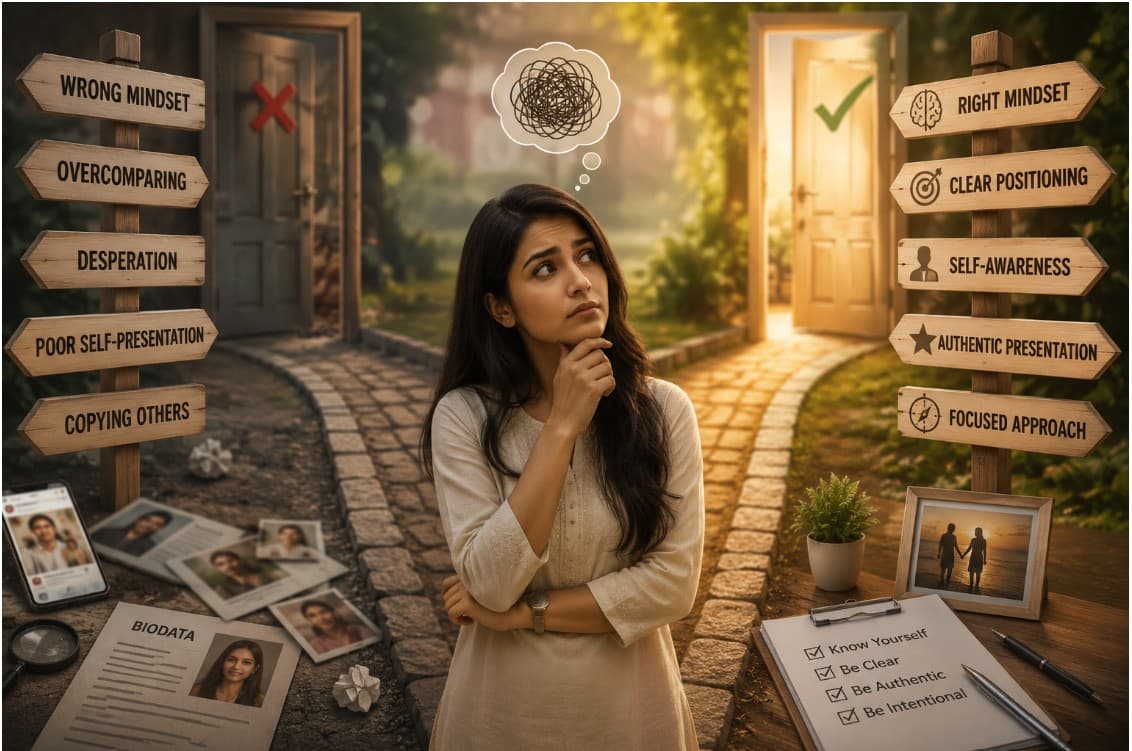
1. Treating Your Biodata Like a Job Resume
This is perhaps the most common mistake people make.
Many biodatas read like professional CVs filled with educational qualifications, promotions, certifications, and salary details, while completely ignoring personality, values, and lifestyle.
A potential life partner is not hiring an employee. They are trying to understand whether they can build a meaningful future with you.
Instead of This:
"Senior Software Engineer with 8 years of experience and multiple industry certifications."
Try This:
"I work as a Senior Software Engineer and enjoy balancing my professional life with family time, travel, and personal growth."
The difference is subtle but powerful. The second version introduces the human being behind the job title.
2. Focusing Only on Material Success
Financial stability is important, but it should not become the entire focus of your biodata.
When every section highlights income, assets, property, and possessions, the profile can appear transactional rather than personal.
A balanced biodata discusses:
- Career
- Family values
- Interests
- Lifestyle
- Long-term goals
- Relationship expectations
The most successful matrimonial profiles present a complete picture rather than a financial statement.
3. Using Generic Self-Descriptions
Words such as simple, caring, honest, family-oriented, and down-to-earth appear in thousands of biodatas.
The problem isn't that these qualities are bad. The problem is that they don't differentiate you.
Instead of making broad claims, provide context.
Generic Statement
"I am family-oriented."
More Meaningful Statement
"I enjoy spending weekends with family and believe strong relationships are built through consistent support and communication."
Specific descriptions help people understand your personality more clearly. Need help writing yours? See our About Me examples for marriage biodata.
Category 2: Information and Content Mistakes
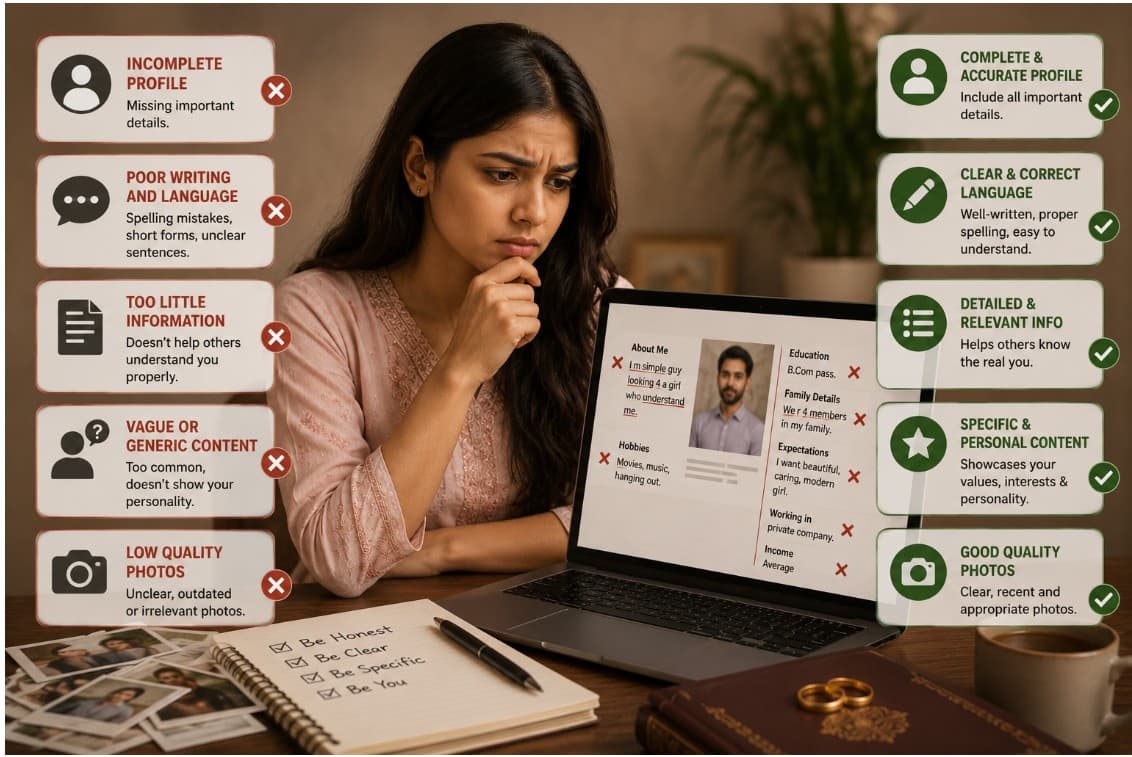
4. Providing Incomplete Information
Missing information creates uncertainty.
When education details, occupation, location, family background, or lifestyle preferences are left incomplete, readers often wonder whether something is being hidden.
A biodata should answer the most common questions before they are asked.
Important sections typically include:
- Basic personal information
- Education
- Occupation
- Family background
- Lifestyle details
- Religious or cultural background
- Partner preferences
Completeness demonstrates seriousness and transparency. See our complete checklist of what to include in a marriage biodata.
5. Writing Too Much or Too Little
Finding the right balance is crucial.
Some biodatas contain pages of unnecessary details that overwhelm readers. Others are so brief that they fail to provide any meaningful insight.
A strong biodata should be concise yet informative.
Think of it this way:
- Include information that helps evaluate compatibility.
- Exclude information that does not contribute to understanding who you are.
If a detail does not help someone understand your personality, values, background, or future goals, it may not need to be included.
6. Ignoring Personal Preferences
Many people spend considerable effort describing themselves but say almost nothing about what they are looking for in a partner.
This creates confusion.
You do not need an exhaustive checklist, but you should communicate important preferences regarding:
- Lifestyle
- Values
- Education
- Career outlook
- Family expectations
- Future goals
Clarity helps both sides determine compatibility earlier in the process.
7. Neglecting Family Background
In many matrimonial settings, family context remains an important consideration.
A biodata should respectfully mention:
- Parents' occupations
- Family structure
- Cultural background
- Religious practices (if relevant)
This is not about showing status. It is about providing context and helping families understand one another.
Category 3: The Trust Killers
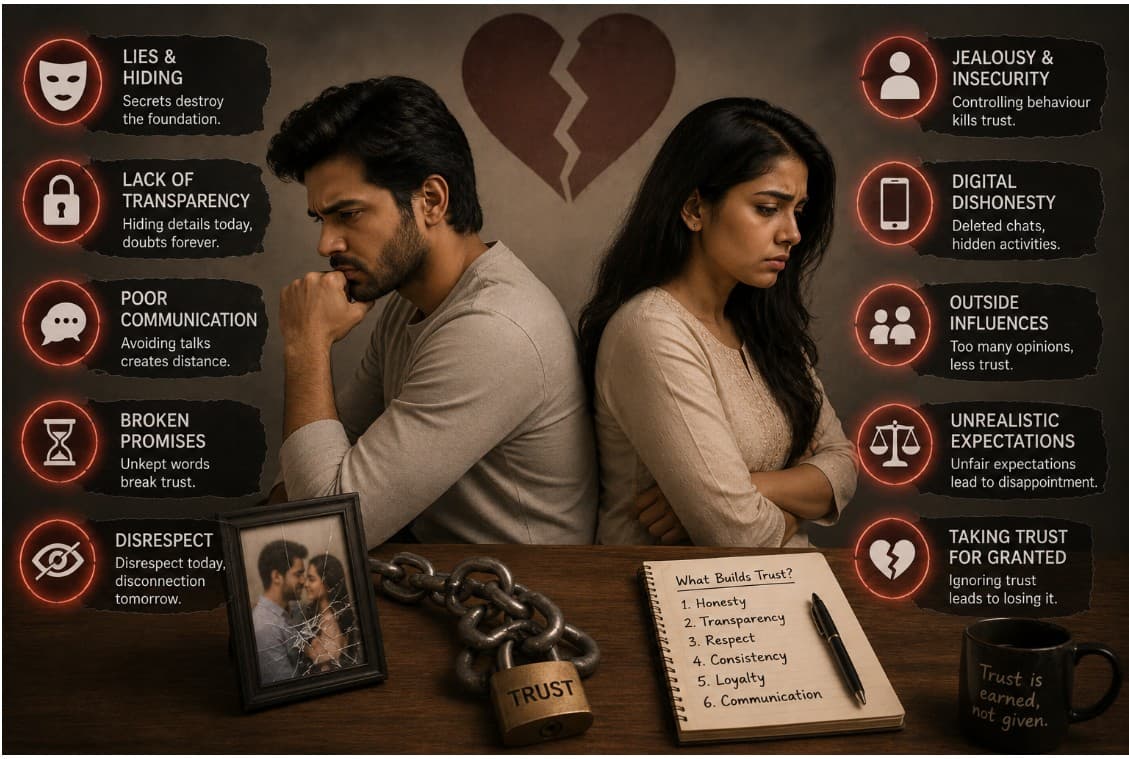
8. Using Low-Quality or Outdated Photos
Your photograph significantly influences first impressions.
Common mistakes include:
- Blurry images
- Old photographs
- Heavy filters
- Excessive editing
- Group photos
- Cropped social media pictures
Use a recent, natural photograph that accurately represents your current appearance. Authenticity always performs better than perfection. For a full guide, see The Marriage Biodata Photo Guide.
9. Exaggerating Qualifications or Income
Some people believe slight exaggerations will improve their chances.
In reality, the opposite often happens.
Whether it involves salary, educational credentials, job title, assets, or achievements, inaccurate information eventually comes to light.
Once trust is damaged, rebuilding it becomes extremely difficult.
Honesty may not attract everyone, but it attracts the right people.
10. Hiding Important Facts
Transparency is one of the strongest foundations for a successful marriage.
Important facts that significantly affect compatibility should not be concealed.
Examples include:
- Previous marriage
- Divorce
- Widowhood
- Significant health conditions
- Major family circumstances
While these conversations can be sensitive, presenting them respectfully and honestly helps attract genuinely compatible matches.
The right match values honesty more than perfection.
11. Not Updating Your Biodata
A biodata should evolve as your life changes.
Common outdated information includes:
- Job roles
- Salary ranges
- Education status
- Residence location
- Contact details
An outdated biodata can create confusion and reduce credibility. Review your profile regularly to ensure all information remains accurate.
Category 4: Presentation and Design Mistakes
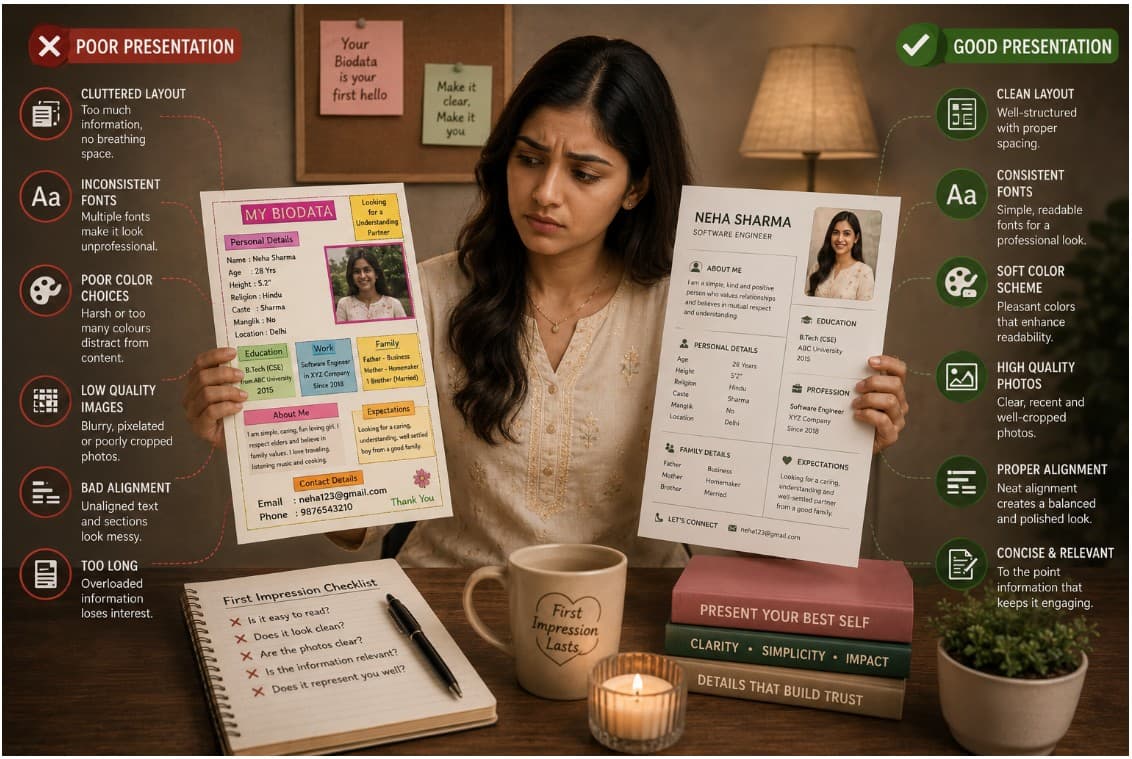
12. Poor Formatting and Design
Even excellent information can lose impact when presented poorly.
Common formatting issues include:
- Multiple font styles
- Inconsistent spacing
- Cluttered layouts
- Poor section organisation
- Difficult-to-read designs
A clean structure improves readability and professionalism. Readers should be able to quickly find the information they are looking for. Choose from 17+ professionally designed templates.
13. Grammar and Spelling Errors
Language mistakes may seem minor, but they often influence perception.
Repeated spelling errors or poorly written sentences can make the profile appear rushed or careless.
Before sharing your biodata:
- Proofread carefully
- Use grammar tools
- Ask a trusted family member to review it
A second set of eyes often catches mistakes you might miss.
14. Copying Someone Else's Biodata Blindly
Templates can inspire, but your biodata should not become a copy of someone else's profile.
Every individual has:
- Different values
- Different goals
- Different family dynamics
- Different life experiences
Your biodata should reflect your unique story rather than a generic format borrowed from another profile.
15. Making the Biodata Look Like a Wall of Text
Large blocks of text discourage reading.
Instead, use:
- Clear headings
- Bullet points
- Logical sections
- Consistent spacing
Good design improves comprehension and creates a better user experience. Create yours now — it's free.
Category 5: Privacy and Safety Mistakes
16. Sharing Excessive Personal Information
Transparency should never come at the expense of privacy.
Avoid sharing:
- Complete residential addresses
- Financial account details
- Sensitive personal documents
- Confidential family information
Provide enough information to build trust without compromising security. For a deeper look at this topic, see our guide on sensitive information in marriage biodata.
17. Using Unprofessional Contact Information
Your contact details should be simple and professional.
Email addresses filled with nicknames, random numbers, or informal phrases can create a poor impression.
A professional email address typically includes your actual name and is easy to verify.
Category 6: Compatibility Mistakes
18. Unrealistic Partner Expectations
Extremely specific requirements often eliminate genuinely compatible matches.
While preferences are important, flexibility is equally valuable.
Focus on qualities that truly matter for long-term compatibility rather than creating an impossible checklist.
19. Failing to Showcase Personality
Many biodatas focus exclusively on education, occupation, and family background.
The result is a profile that feels factual but not memorable.
Include information about:
- Hobbies
- Interests
- Travel preferences
- Lifestyle choices
- Future aspirations
These details help people connect with you as a person.
20. Not Reviewing Before Sharing
Many people send their biodata immediately after creating it without conducting a final review.
Before sharing, check for:
- Missing information
- Formatting issues
- Grammar mistakes
- Incorrect dates
- Outdated details
A simple review process can prevent avoidable errors.
21. Not Being Consistent With Your Biodata During Meetings
Creating a biodata is only the first step. A common mistake is sharing one set of preferences, goals, or expectations in your biodata and then saying something completely different during a call or in-person meeting.
Before speaking with a potential match, review your biodata and ensure it accurately reflects your current views. When your conversations align with what you've written, it builds trust and avoids unnecessary confusion.
Also Read: What to Include in a Marriage Biodata — Complete Checklist 2026
Tips to Create an Effective Marriage Biodata
If you want your biodata to stand out for the right reasons, keep these principles in mind:
Focus on Authenticity
People connect with genuine profiles. Present yourself honestly rather than trying to impress everyone.
Prioritize Clarity
Use clear language and organised sections. Make it easy for readers to understand your profile quickly.
Balance Facts and Personality
Include educational and professional information, but don't forget to showcase your values, interests, and aspirations.
Be Transparent
Honest communication creates trust and attracts compatible matches.
Keep It Updated
Review your biodata periodically and update any information that has changed.
How BiodataPlus Helps You Avoid These Mistakes
After looking at these common mistakes, a clear pattern emerges: most problems stem from poor structure, missing information, weak presentation, or generic templates.
This is exactly where BiodataPlus helps.
BiodataPlus was designed specifically for matrimonial biodatas — not job resumes. The goal is to help you create a biodata that is professional, trustworthy, visually appealing, and tailored to matrimonial expectations.
With BiodataPlus, you can:
- Create a free marriage biodata in any design
- Choose professionally designed layouts
- Build biodata for all religions and communities
- Create profiles for all castes, genders, and unique matrimonial situations
- Design biodatas for first marriages, remarriages, divorce cases, widow/widower profiles, and other personal circumstances
- Ensure important details are not accidentally missed
- Present information in a clean, organised format
Rather than spending hours adjusting fonts, formatting sections, and deciding what information to include, you can focus on presenting your authentic self while BiodataPlus handles the structure. Create for free
Conclusion
A great marriage biodata isn't about presenting a perfect image — it's about presenting an authentic one. When your profile clearly reflects who you are, your values, and what you're looking for, it becomes much easier to attract meaningful and compatible matches.
If you're looking for a simpler way to create a professional biodata, BiodataPlus helps you build free marriage biodatas with well-designed templates for all religions, castes, genders, and matrimonial situations. Our platform makes it easy to create a biodata that looks polished, complete, and ready to share with confidence. Try now — it's free
Also Read: The Marriage Biodata Photo Guide