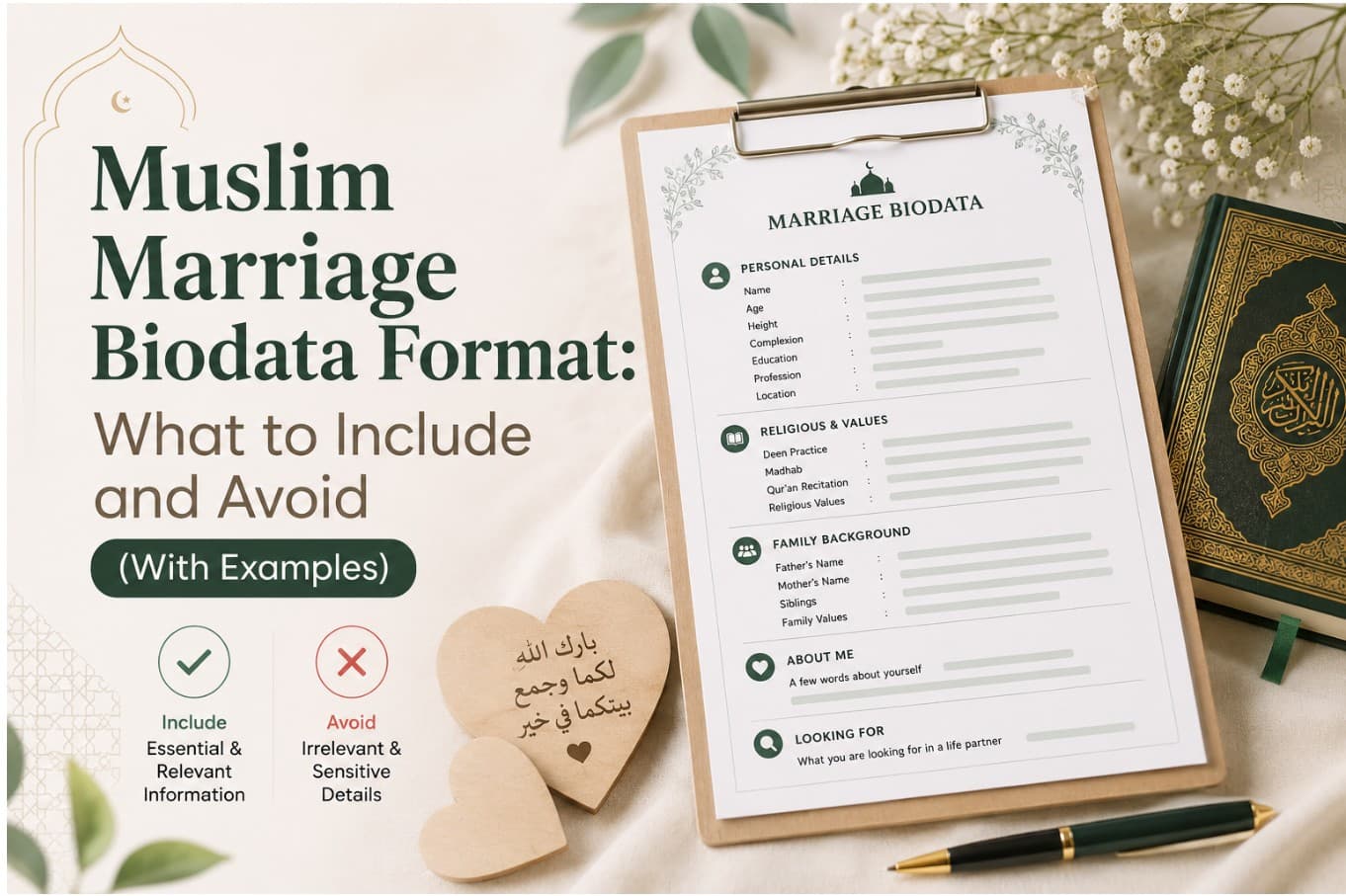
A Muslim marriage biodata should include your personal details, religious profile, education, career, family background, lifestyle, partner preferences, and contact information. The goal is to help families and potential matches understand your values, background, and compatibility in a clear and respectful way.
Many people are unsure about what information to add, how much religious detail to share, whether salary should be mentioned, or what personal details should remain private. A well-written biodata answers these questions without overwhelming the reader.
Why Your Marriage Biodata Creates the First Impression Before Any Conversation
Before a phone call, meeting, or family discussion happens, your marriage biodata often becomes the first introduction.
In many Muslim families, parents, guardians, and close relatives review biodatas before any direct interaction takes place. They use the information to assess compatibility, values, family background, and long-term suitability.
A well-structured biodata helps readers quickly understand who you are and what matters to you. It creates clarity and reduces misunderstandings.
On the other hand, poorly organised biodata can unintentionally create confusion. Missing information, vague descriptions, or overly demanding language may cause families to move on even when there could have been genuine compatibility. Try Now!
The 7 Essential Sections Every Muslim Marriage Biodata Should Include
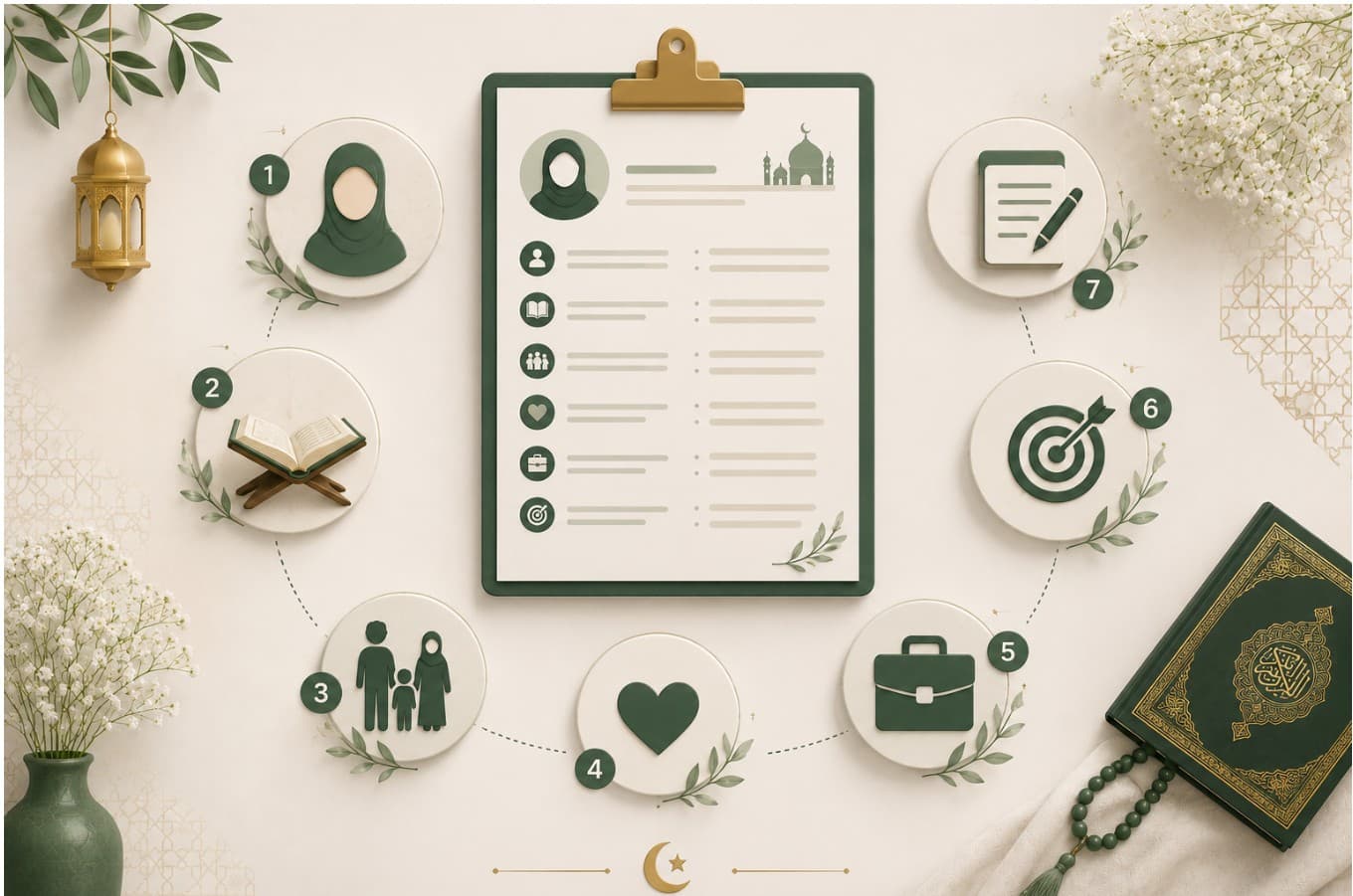
1. Basic Personal Information
This section provides the foundation of your biodata and helps families quickly understand your background.
Include:
- Full name
- Age
- Date of birth
- Height
- Current city
- Mother tongue
- Nationality
- Marital status
These details may seem simple, but they help establish basic compatibility factors that many families consider early in the process.
Keep the information factual and updated.
2. Religious and Deen Profile
This is one of the most important sections in a Muslim marriage biodata.
Many families prioritise religious compatibility before educational or financial compatibility. However, this section should focus on transparency rather than appearing more religious than you actually are.
You may include:
| Religious Detail | Example |
|---|---|
| Sect | Sunni, Shia, etc. |
| Maslak (if relevant) | Deobandi, Barelvi, Ahle-Hadith, etc. |
| Salah | Prays five times daily |
| Fasting | Observes Ramadan regularly |
| Quran | Regular recitation |
| Hijab/Beard | If applicable |
| Religious goals | Interest in Islamic learning and growth |
Instead of writing vague statements such as "Very religious," be specific and honest.
For example:
- "Regularly performs daily prayers."
- "Observes hijab and values modesty."
- "Looking for a spouse who prioritises Islamic values."
Specificity helps families understand compatibility more accurately.
3. Education and Career Details
This section provides insight into your educational background and professional life.
Include:
- Highest qualification
- University or institution
- Occupation
- Employer
- Professional achievements (if relevant)
- Income (optional)
The purpose is clarity, not self-promotion.
Many families appreciate understanding educational and career stability, but excessive focus on titles, awards, or status can make the biodata feel more like a resume than a marriage profile.
4. Family Background
Families often pay close attention to this section because it helps them understand upbringing, values, and family environment.
Include:
- Father's name and occupation
- Mother's name and occupation
- Number of siblings
- Siblings' occupations or education
- Native place
- Family values and background
A concise and respectful family description is usually more effective than a lengthy narrative.
Remember that this section is not about showcasing social status. It is about providing context.
5. Lifestyle and Personal Values
This is where your biodata starts feeling personal and human. Many biodatas focus heavily on education and family details while neglecting personality.
You can include:
- Hobbies and interests
- Personality traits
- Future goals
- Community involvement
- Islamic values
- Lifestyle preferences
Instead of writing:
"Reading books."
You could write:
"Enjoy reading Islamic history, spending time with family, and participating in community activities."
This gives a much clearer picture of who you are beyond your qualifications.
6. Partner Preferences
This section should communicate preferences, not demands.
Include:
- Religious expectations
- Education preferences
- Age range
- Location preferences
- Lifestyle expectations
- Family values
Here is an important distinction:
Less effective:
- Must earn ₹30 lakh+ annually.
- Only highly educated families should contact.
More effective:
- Looking for a financially responsible partner.
- Preference for someone who values education and family relationships.
The second approach sounds respectful and opens more opportunities for meaningful matches.
7. Contact Information
The final section should make it easy for interested families to reach out.
You may include:
- Parent or guardian contact number
- Email address
- WhatsApp number
- Marriage bureau reference (if applicable)
Privacy matters.
Avoid sharing excessive personal information in publicly circulated biodatas. Sensitive details can always be discussed later once both families establish trust. Create Today!
Muslim Marriage Biodata Format (Ready-to-Copy Structure)
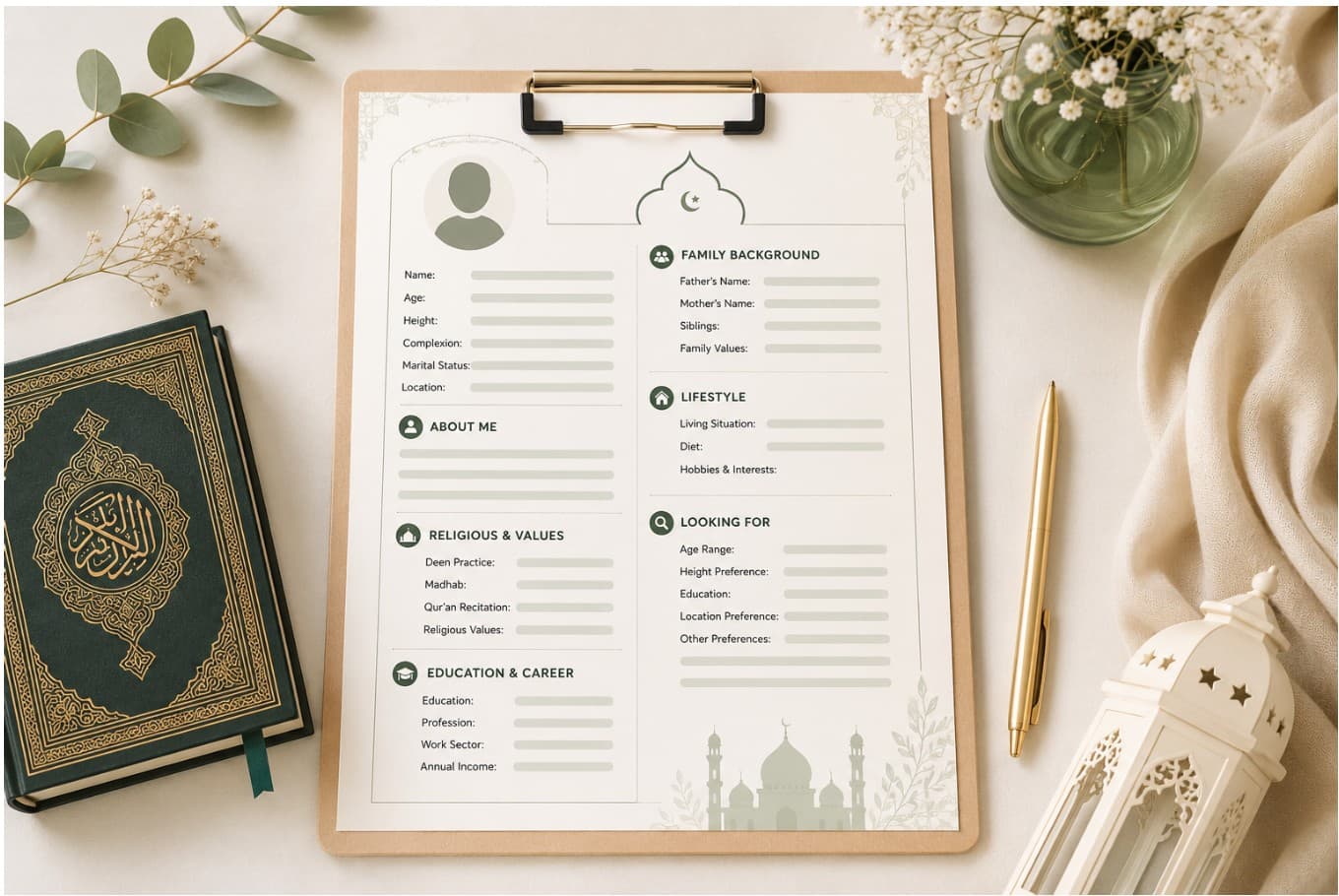
Use the following structure as a simple template:
Personal Details
- Name:
- Age:
- Date of Birth:
- Height:
- City:
- Mother Tongue:
- Marital Status:
Religious Information
- Sect:
- Maslak:
- Salah:
- Quran Recitation:
- Fasting:
- Religious Expectations:
Education
- Highest Qualification:
- Institution:
- Additional Certifications:
Career
- Occupation:
- Employer:
- Work Location:
- Income (Optional):
Family Details
- Father's Occupation:
- Mother's Occupation:
- Siblings:
- Native Place:
- Family Background:
Lifestyle and Values
- Hobbies:
- Personality:
- Future Goals:
- Islamic Values:
Partner Expectations
- Religious Preferences:
- Education Preferences:
- Location Preference:
- Other Expectations:
Contact Details
- Parent/Guardian Contact:
- Email:
- WhatsApp:
8 Mistakes That Can Make Families Skip Your Biodata Immediately
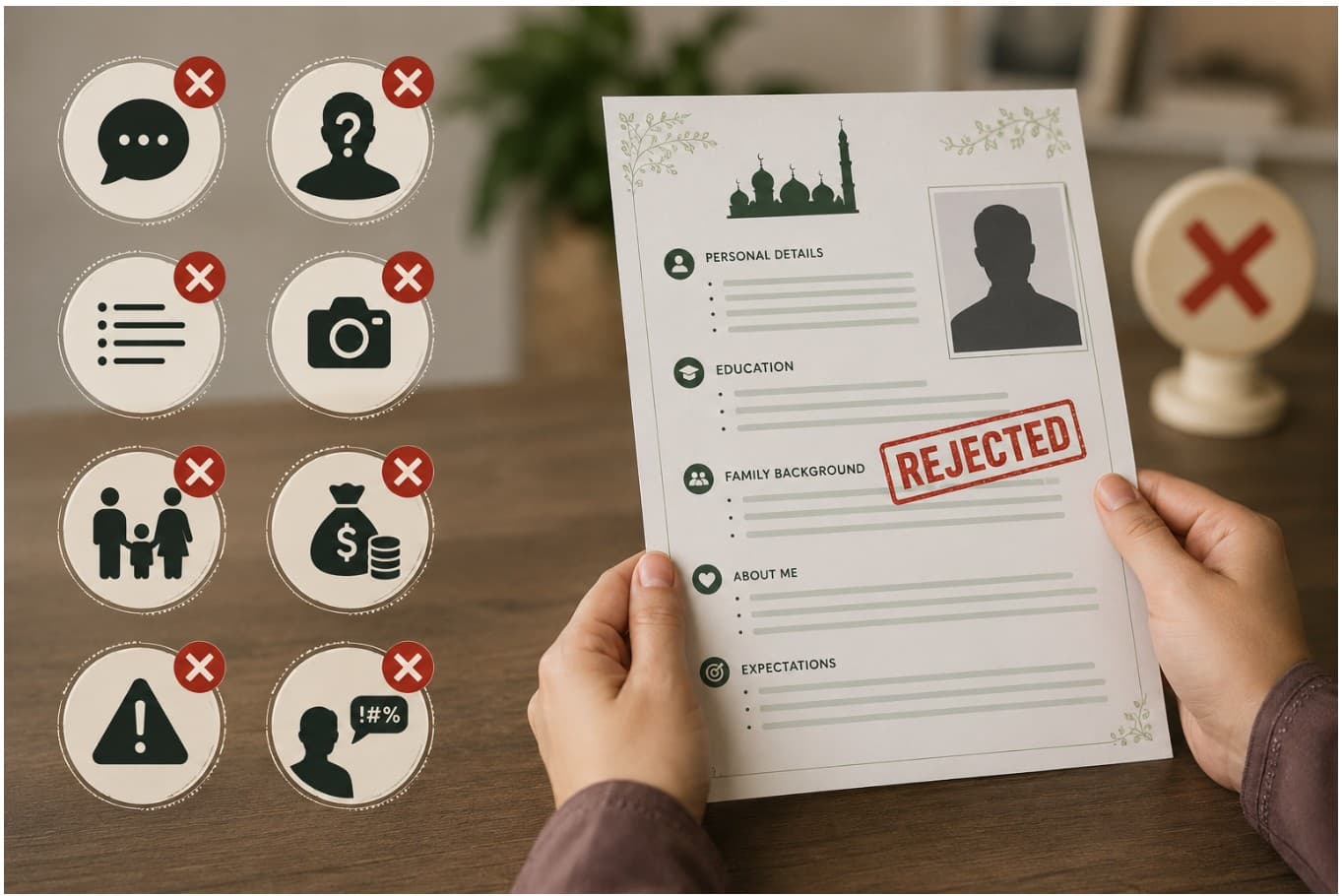
1. Using Overly Edited or Glamorous Photos
Authenticity builds trust. Choose recent, clear, and modest photographs that accurately represent you.
2. Writing Demands Instead of Preferences
Aggressive language can make even a strong profile appear difficult. Respectful wording creates a better impression.
3. Sharing Too Much Private Information
Avoid including:
- Full home address
- Bank details
- Sensitive financial information
- Personal identification numbers
Protect your privacy.
4. Leaving Important Sections Blank
Missing information often raises unnecessary questions. If a section is relevant, complete it clearly.
5. Exaggerating Achievements
Trust is more valuable than impressiveness. Any information shared may eventually be verified through conversations.
6. Writing Very Long Paragraphs
Families often review multiple biodatas. Short sections, bullet points, and clear formatting improve readability.
7. Focusing Only on Wealth and Status
Financial stability matters, but compatibility goes beyond income and social standing. Balanced profiles generally receive better responses.
8. Using Negative Language
Avoid statements like:
- "Don't contact if..."
- "Only rich families..."
- "Not interested in..."
Negative language creates a poor first impression.
Also Read: How to Verify a Marriage Biodata: Safety Guide & Tips
What Makes a Muslim Marriage Biodata Stand Out Positively?
The strongest biodatas are not necessarily the most impressive. They are usually the most honest and well-organised.
A biodata stands out when it demonstrates:
- Clarity
- Honesty
- Religious transparency
- Balanced information
- Respectful language
- Clean formatting
- Realistic expectations
Families appreciate sincerity far more than exaggerated achievements.
Should You Create a One-Page or Multi-Page Marriage Biodata?
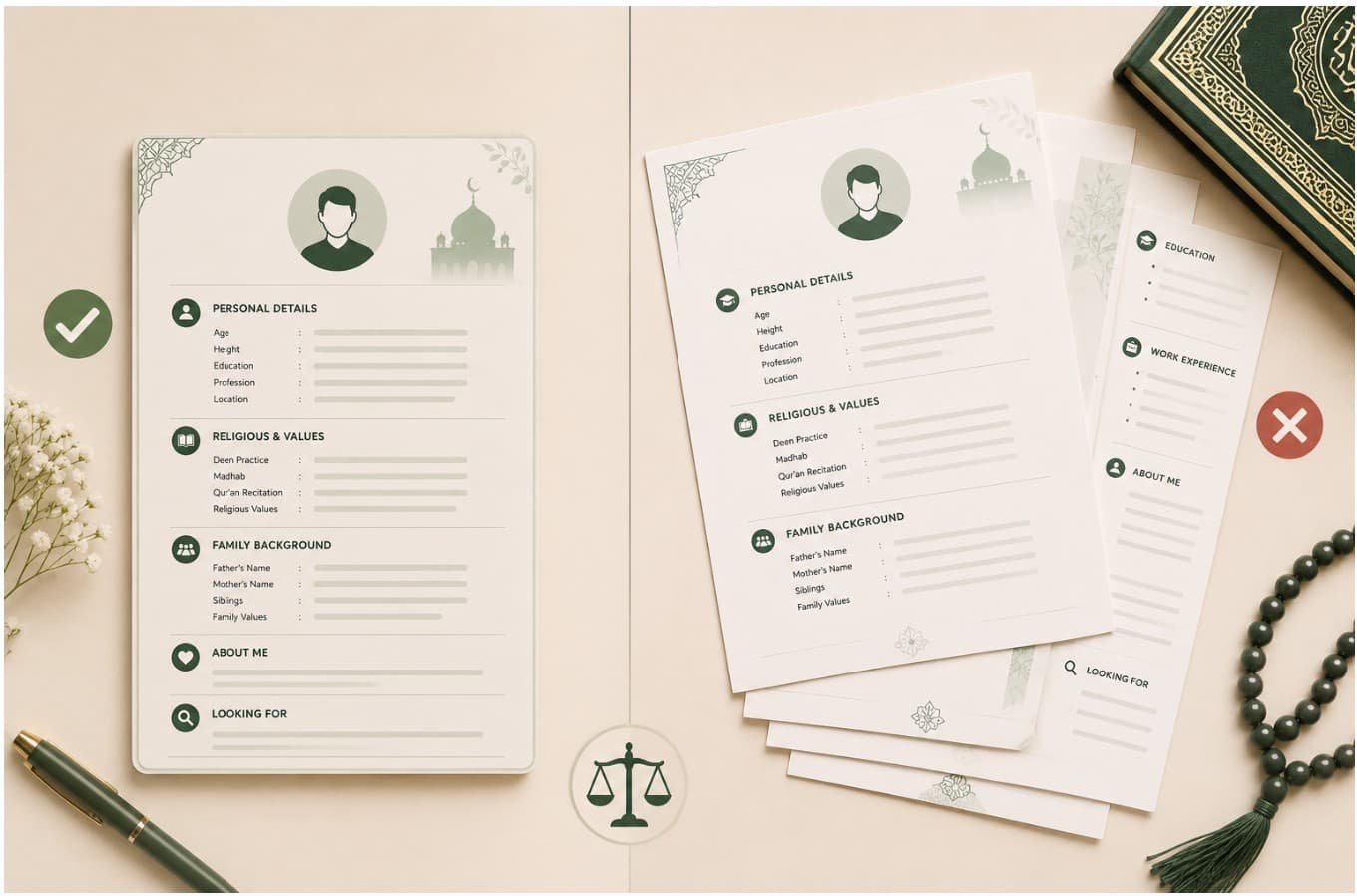
There is no universal rule.
One Page
Best for:
- Quick introductions
- Basic information
- Initial screening
Two to Three Pages
Best for:
- Detailed family information
- Religious profile
- Personal values
- Partner preferences
For most people, a two-page biodata offers the best balance between completeness and readability.
Checklist Before Sending Your Marriage Biodata
Before sharing your biodata, review this checklist:
- Personal details completed
- Religious information included
- Education and career information verified
- Family details added
- Contact information checked
- Recent photograph attached
- Spelling and grammar reviewed
- Expectations written respectfully
- Privacy-sensitive information removed
A final review can prevent avoidable mistakes.
Create Your Muslim Marriage Biodata in Minutes with BiodataPlus
Now that you understand what information belongs in a Muslim marriage biodata, the next challenge is formatting everything professionally.
Many people spend hours trying to adjust fonts, align sections, manage photos, and create PDF files. Even after all that effort, the final result often looks cluttered or inconsistent.
That is exactly why we built BiodataPlus.
Our platform is designed specifically to help brides, grooms, parents, and marriage bureaus create professional marriage biodatas without struggling with manual formatting.
Why Many People Prefer Online Biodata Builders
Common challenges include:
- Formatting issues in Word documents
- Unprofessional layouts
- Mobile editing difficulties
- Time-consuming revisions
- PDF export problems
An online biodata builder removes these obstacles and helps you focus on the information itself.
Why BiodataPlus Is a Popular Choice
With BiodataPlus, you get:
- Muslim-specific biodata formats
- Every design free to download
- Mobile-friendly editing
- Professional layouts
- Instant PDF downloads
- Easy customization
- Clean and organised designs
Instead of worrying about design and formatting, you can focus on presenting yourself accurately and respectfully.
Conclusion
A Muslim marriage biodata should reflect honesty, clarity, and cultural respect. Include the fields that matter — sect, community, and family background — and present them in a clean, structured format that families can scan easily. Leave out content that doesn't apply (gotra, Manglik status), and let the structure do the work of creating a strong first impression. Browse Muslim marriage biodata templates or explore all community biodata formats to find the right design.
Also Read: Mistakes People Make While Creating a Biodata for Marriage