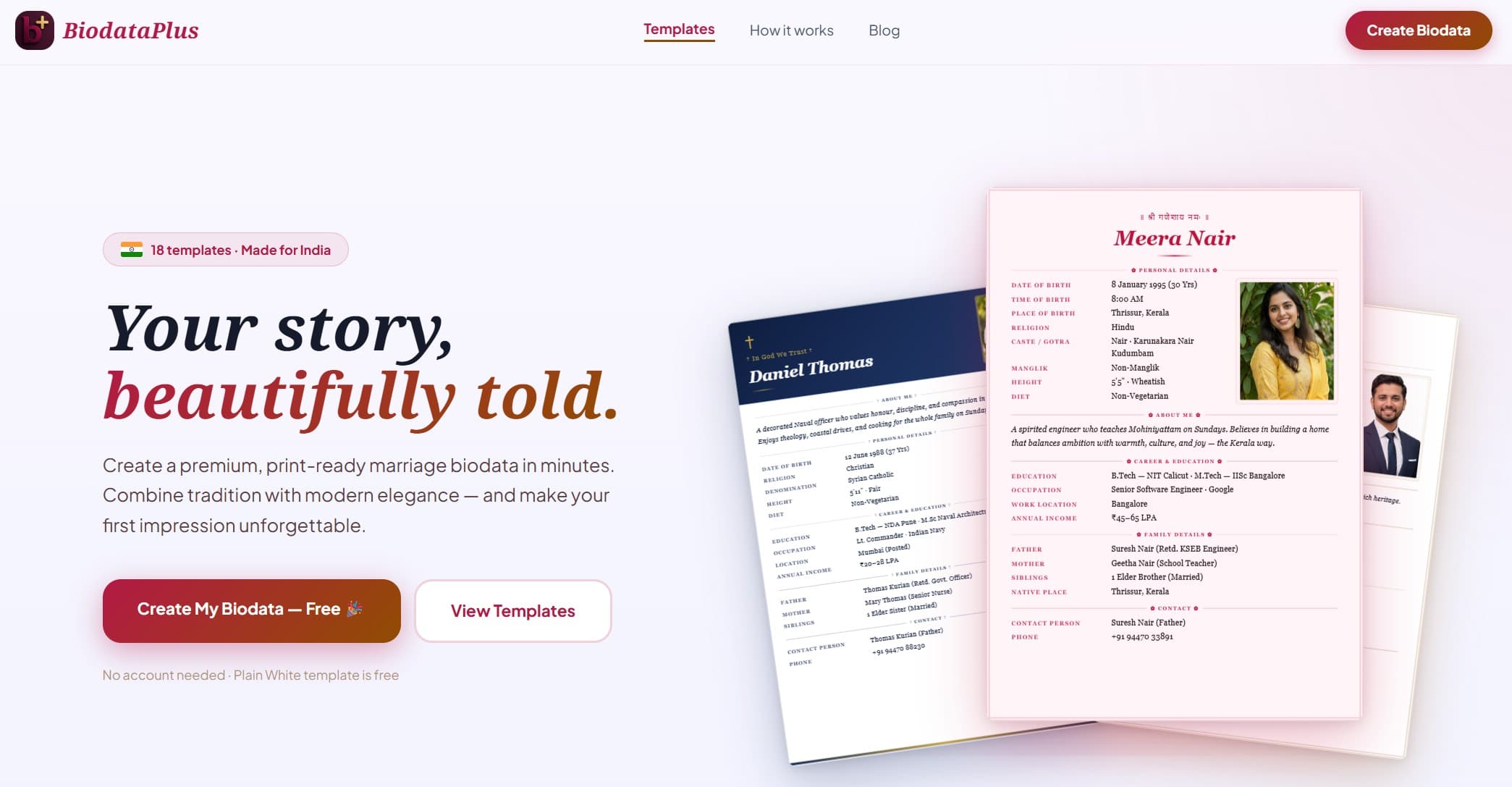
A resume gets you a job interview. A marriage biodata introduces your family to another family — before anyone has met, before any conversation has happened. The stakes are different, the audience is different, and the document needs to be different.
Yet many families make the mistake of adapting a job resume for matrimonial use — adding a photo here, a family section there. The result is an awkward hybrid that feels neither personal nor professional, and misses most of what the receiving family actually needs to see.
The Core Difference
A resume is a professional document used for job applications. Its audience is a hiring manager or recruiter. It focuses on your skills, work history, and achievements.
A marriage biodata is a personal document used in Indian matrimonial introductions. Its audience is a prospective family. It focuses on who you are as a person — your background, values, family, and physical attributes.
Side-by-Side Comparison
| Feature | Resume | Marriage Biodata |
|---|---|---|
| Purpose | Job application | Matrimonial introduction |
| Audience | Employer / HR | Prospective family |
| Photo | Optional / often excluded | Always included |
| Age / DOB | Rarely included | Always included |
| Religion / Caste | Never included | Core section |
| Family details | Not included | Full section |
| Skills list | Central section | Not included |
| Tone | Professional, formal | Warm, personal |
| Length | 1–2 pages | 1–2 pages |
Why Marriage Biodata Needs Special Attention
Many people make the mistake of adapting their job resume for matrimonial use — just adding a photo and family section. This produces an awkward hybrid that feels neither personal nor professional.
- The design matters more — families share biodatas via WhatsApp and print, so it must look polished
- Tone should be warm, not clinical — avoid corporate language like "results-driven professional"
- The About Me section is different — it should convey personality and values, not career achievements
- Gotra, manglik status, and time of birth are essential — these are used for kundli matching
When to Use Which
- Use a resume for: jobs, internships, academic applications, professional networking
- Use a marriage biodata for: matrimonial websites, family introductions, marriage bureaus, WhatsApp sharing with relatives
- Never use a job resume as a marriage biodata — they serve different audiences with different expectations
Related Guides
- How to Write a Marriage Biodata — Complete Guide — covers every section with tips and examples
- What to Include in a Marriage Biodata — the definitive checklist for a complete matrimonial biodata
- How to Create an Attractive Marriage Biodata — design, photo, and layout advice
- Browse 17 Free Biodata Templates — 17 designs, print-ready PDF download