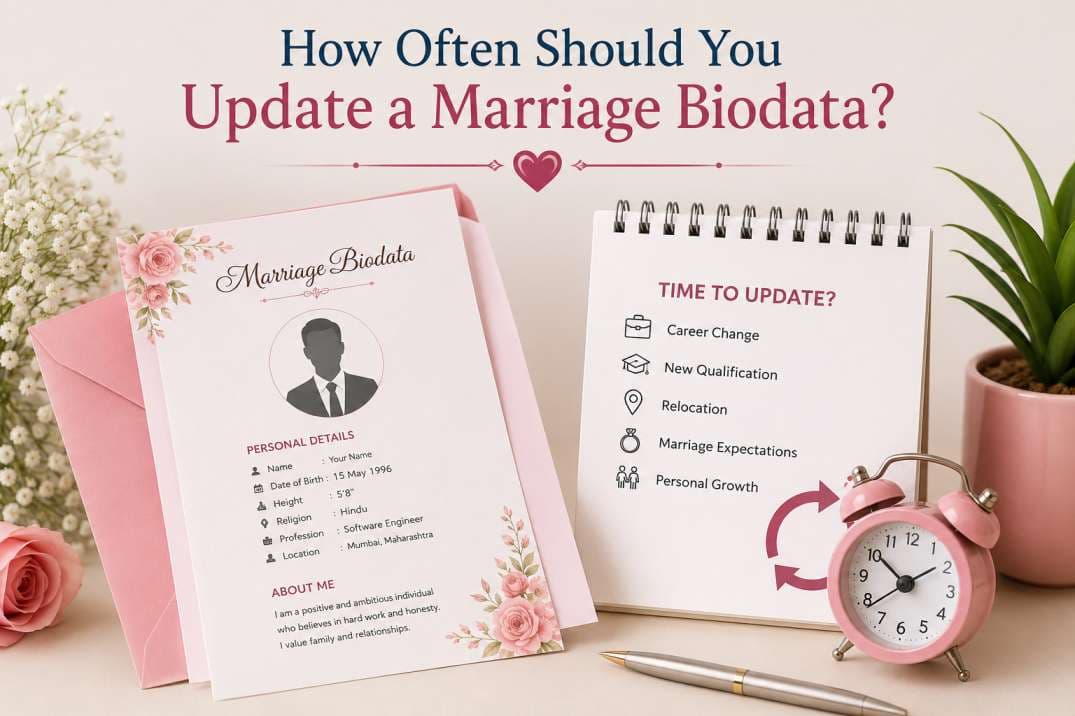
You should review your marriage biodata every six months, even if nothing major has changed. However, if you get a new job, receive a promotion, move to another city, complete a degree, update your contact details, change your partner preferences, or add a recent photograph, you should update it immediately. This ensures families always see the most accurate version of your profile and avoids unnecessary confusion during the matchmaking process.
Many people spend hours creating a marriage biodata, choose a professional template, download the PDF, and start sharing it with relatives. After that, they rarely open it again. As time passes, some details may no longer reflect their current life.
A marriage biodata is not a one-time document. It should evolve with your life so every family receives an accurate, up-to-date picture of who you are today.
Most People Create Their Biodata Once — and Forget About It
Creating a marriage biodata takes time, so most people complete it once, save the PDF, and never update it again. Over time, your job, location, education, goals, and even appearance can change, making the information outdated.
Families notice these details, even if they don't mention them. An old company name, an outdated photograph, or an inactive phone number can make them wonder:
- Are you still actively looking for a match?
- Is the information still accurate?
- Has your career or personal situation changed?
- Did someone share an old version?
Instead of asking these questions, many families simply move on to a profile that appears more current.
An updated marriage biodata shows that you are actively involved in the matchmaking process and committed to sharing accurate information.
The Simple Rule: Review Your Marriage Biodata Every Six Months
There is no fixed rule for updating a marriage biodata, but reviewing it every six months is a good practice. Even if nothing major has changed, a quick review helps you catch outdated details before sharing your profile again.
Since your biodata creates the first impression, make sure it still reflects your current life.
Six-Month Marriage Biodata Review Checklist
- Verify your phone number and email address.
- Check your current company and job title.
- Add any new degree, course, or certification.
- Review your partner preferences.
- Replace old photographs if needed.
- Fix spelling or formatting errors.
- Update family details if anything has changed.
Even small updates can make your biodata look more accurate and professional.
Expert Tip: Add the last updated month to your file name, such as Marriage_Biodata_July_2026.pdf. This makes it easy to identify the latest version and know when it's time for another review.
Update Priority Table: What Should You Change Immediately?
Not every change requires instant editing, but some updates should never wait. The table below can help you decide.
| Life Change | Should You Update Immediately? | Why It Matters |
|---|---|---|
| New job or company | Yes | Career information is one of the first things families notice. |
| Promotion or designation change | Yes | Reflects your current professional growth. |
| Salary or income update | Usually | Update if you choose to mention salary or financial details. |
| New phone number or email | Yes | Prevents missed communication. |
| Relocation to another city or country | Yes | Location often influences marriage decisions. |
| Recent photograph | Yes | Helps families see your current appearance. |
| Higher education or certification | Yes | Shows your latest qualifications. |
| New hobby or interest | Optional | Can be added during your next review. |
| Language learned | Optional | Helpful but not always urgent. |
Don't Wait Six Months If These Changes Happen
Some life changes should be reflected in your marriage biodata immediately. Waiting for your next six-month review could mean sharing outdated information with prospective families.
New Job or Promotion
A new job or promotion is one of the biggest reasons to update your biodata. Families often look at your career to understand your professional stability and future plans. If your biodata still mentions your previous employer, it can create unnecessary doubts.
Update:
- Current employer
- Job title or designation
- Work location
- Industry (if changed)
Moved to Another City or Country
Your location can influence many marriage decisions. If you've moved to a new city, relocated abroad, or changed to remote work, your biodata should reflect it.
Update:
- Current city or country
- Work location
- Relocation plans (if applicable)
- Visa or residency status (if relevant)
Add a Recent Photograph
Your photo should reflect how you look today. If it's over six months old or your appearance has changed noticeably, replace it with a recent one.
Consider updating your photo if you've:
- Changed your hairstyle or beard
- Started or stopped wearing glasses
- Had a noticeable weight change
- Taken a recent professional-quality photograph
A recent photo builds trust by giving families an accurate first impression.
Changed Your Contact Details
An inactive phone number or email can cause you to miss genuine proposals. Many families won't try a second time if they can't reach you.
Update your biodata immediately whenever your primary phone number or email changes, and share the latest version.
Your Partner Preferences Have Changed
As your career and life evolve, your expectations may change too. Updating these preferences helps families understand what you're looking for today.
Review and update:
- Preferred age range
- Preferred location
- Profession or career expectations
- Lifestyle preferences
- Willingness to relocate
- Family expectations
Keeping these preferences current helps avoid conversations that are unlikely to lead to a suitable match.
Small Updates That Quietly Make a Big Difference
Not every update involves a major life event. Sometimes, smaller improvements make your biodata more informative and help families understand you beyond your education and job title.
These details are optional, but they often answer questions that families naturally have during the early stages of matchmaking.
Consider reviewing whether you should add:
- Languages you speak if you've learned a new language.
- Professional achievements such as awards, recognitions, or certifications.
- Updated hobbies and interests that genuinely reflect your lifestyle today.
- Remote or hybrid work status, especially if it gives you flexibility to relocate.
- Visa or residency status for overseas opportunities.
- Family information if there has been an important change.
- Marriage expectations if your priorities have evolved.
These updates may seem small individually, but together they create a profile that feels complete, current, and thoughtfully maintained.
The WhatsApp Forwarding Problem That Many People Ignore
One of the biggest reasons outdated biodatas continue circulating is surprisingly simple — WhatsApp.
Once you send a PDF to parents, relatives, or family friends, they often forward the same file to other families. Even if you update the biodata later, those older copies continue moving from one person to another.
This creates what can be called version drift, where different families receive different versions of your profile.
For example:
- One family receives your old employer details.
- Another sees your updated company.
- A third still has your previous phone number.
None of these families realises they are looking at different versions of the same biodata.
This is why updating your biodata isn't enough. You should also make sure you're sharing the latest version whenever possible.
Red Flags That Make a Marriage Biodata Look Outdated
Sometimes a biodata appears outdated even before someone reads every section.
Common signs include:
- Photograph taken three or four years ago.
- Previous employer still listed.
- "Currently pursuing" written even after completing the course.
- Old address after relocating.
- Inactive contact number.
- Different information across matrimonial websites and PDF biodatas.
- File names like Final_Final_New_Latest2.pdf, making it difficult to know which version is correct.
These are small issues, but together they can affect how seriously your profile is taken.
Also Read: How to Create an Attractive Marriage Biodata That Gets More Responses
5-Minute Self-Audit: Does Your Marriage Biodata Need an Update?
Before sending your biodata again, spend five minutes reviewing it using this checklist.
Ask yourself:
- Have you changed your company or job title?
- Have you moved to another city or country?
- Have you completed a degree or certification?
- Is your primary phone number still the same?
- Is your photograph less than six months old?
- Have your partner preferences changed?
- Does every section still reflect your current life?
- Does your matrimonial profile match your biodata?
If you answered Yes to any update-related question, it's a good time to refresh your biodata before sharing it again.
Pro Tip: Keep a note of the last updated date in your personal files or use a filename such as Marriage_Biodata_July_2026.pdf. It becomes much easier to identify the latest version, especially when multiple copies are stored on different devices.
One Marriage Biodata Doesn't Always Fit Every Family
Many people assume they should maintain only one biodata, but that's not always the most practical approach.
It is perfectly reasonable to keep multiple versions while ensuring the core information remains exactly the same.
For example:
| Version | Best Used For |
|---|---|
| Detailed Version | Families who prefer comprehensive information. |
| Short Version | Initial introductions or WhatsApp sharing. |
| English Version | Families comfortable with English. |
| Hindi Version | Families who prefer reading in Hindi. |
| Photo Version | When a photograph is requested. |
| Without Photo Version | Where families prefer to exchange details first. |
The purpose is not to change facts for different families. Instead, you are adapting the presentation while keeping your information consistent and accurate.
Why Keeping Your Marriage Biodata Updated Is Easier Online
Updating a traditional Word document sounds simple until you actually need to do it.
You open an old file, adjust formatting, realign text boxes, replace photographs, convert it into a PDF again, rename the file, and then try to remember which version you last shared with relatives. If several copies already exist, it becomes surprisingly easy to send the wrong one.
This is exactly why many people continue sharing outdated biodatas without even realising it.
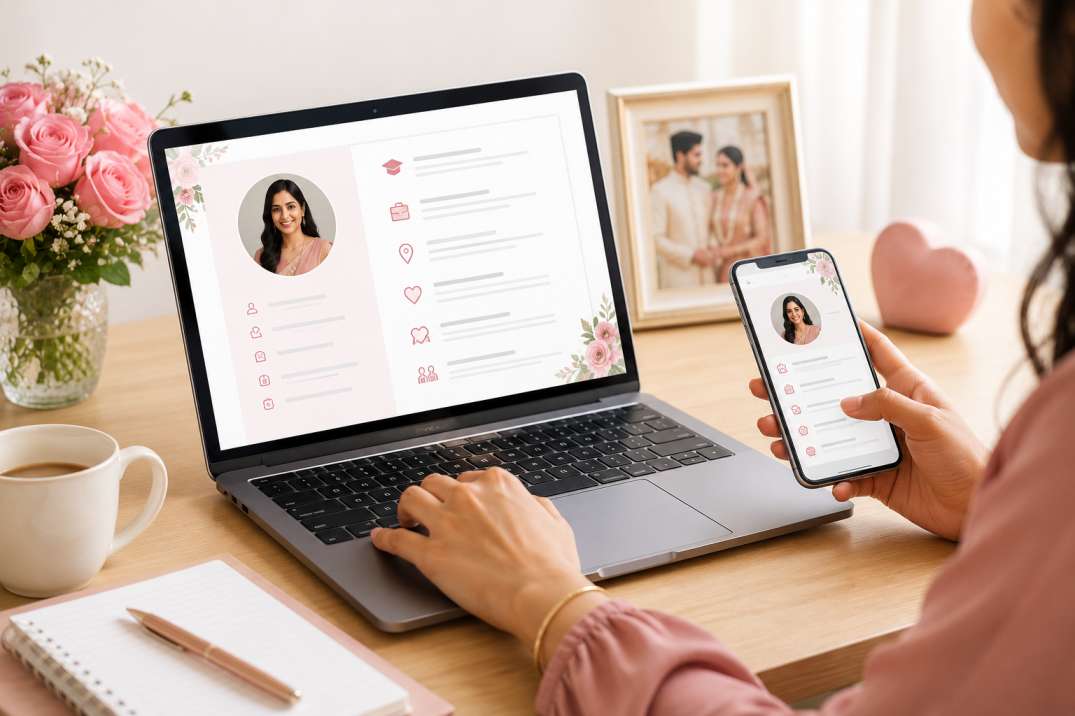
An online biodata platform removes much of this manual effort because you edit your details once instead of redesigning the document every time something changes.
Keep Your Marriage Biodata Always Ready with BiodataPlus
At BiodataPlus, we designed our platform to solve this everyday problem. Instead of creating a marriage biodata once and struggling with multiple Word files or PDFs later, our platform helps you keep your profile updated whenever your life changes.
With BiodataPlus, you can:
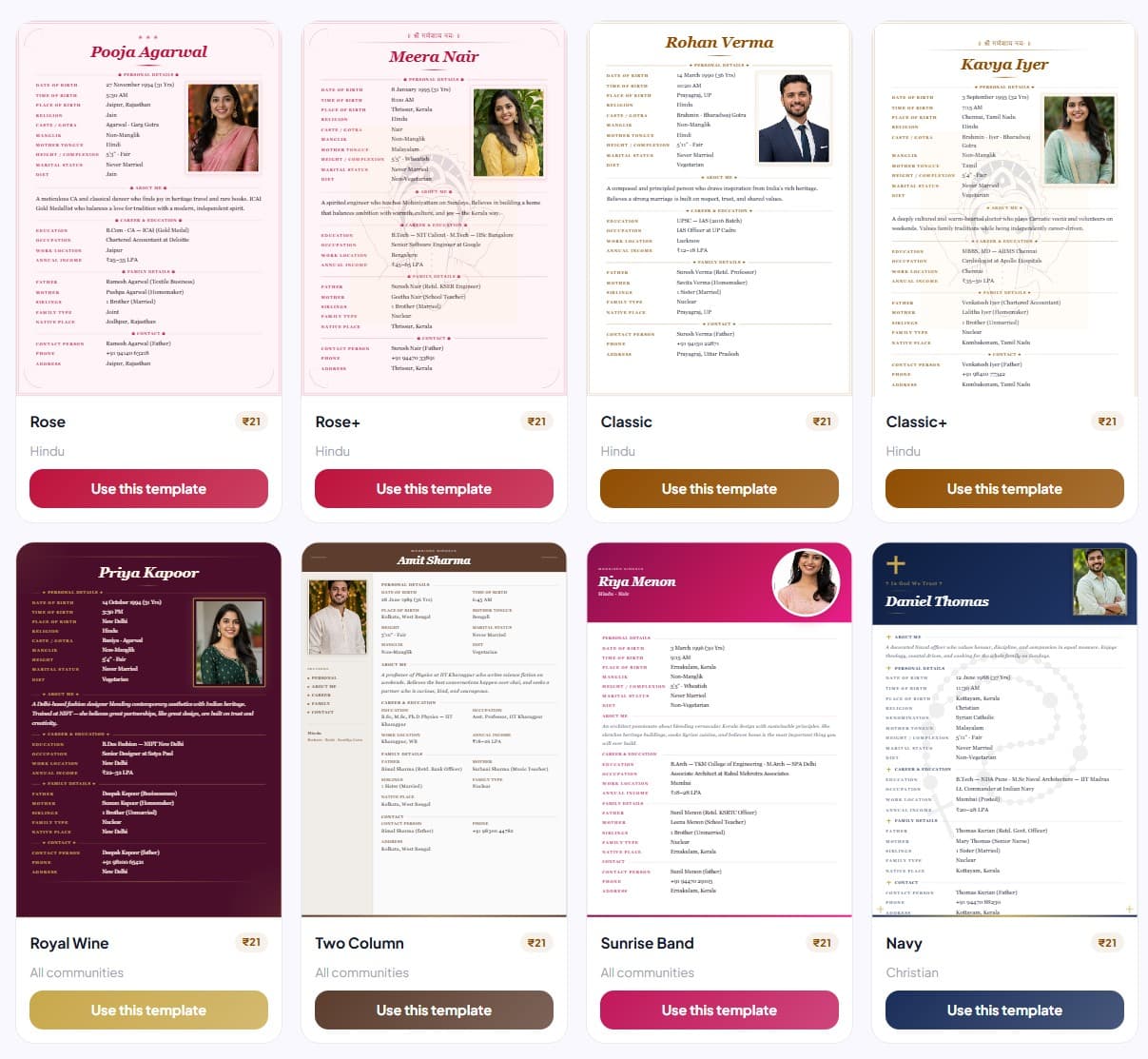
- Create a free marriage biodata using professionally designed templates.
- Edit your information anytime without rebuilding the document.
- Update your biodata as many times as needed.
- Download a fresh PDF whenever you want to share the latest version.
- Keep your profile looking clean, organised, and consistent throughout your matchmaking journey.
Rather than treating your biodata as a one-time document, our platform helps you maintain it as a living profile that grows with you.
Conclusion
Your marriage biodata is not a one-time document. As your career, education, location, and preferences change, it should be updated to reflect your current life.
Review it every six months and update it immediately after major life changes to avoid outdated information, build trust, and make a better first impression.
With BiodataPlus, you can create, edit, and update your marriage biodata anytime without starting from scratch. Create your biodata today and always share the latest version with confidence.
Also Read: What Families Really Notice First in a Marriage Biodata (Before Reading Anything Else)