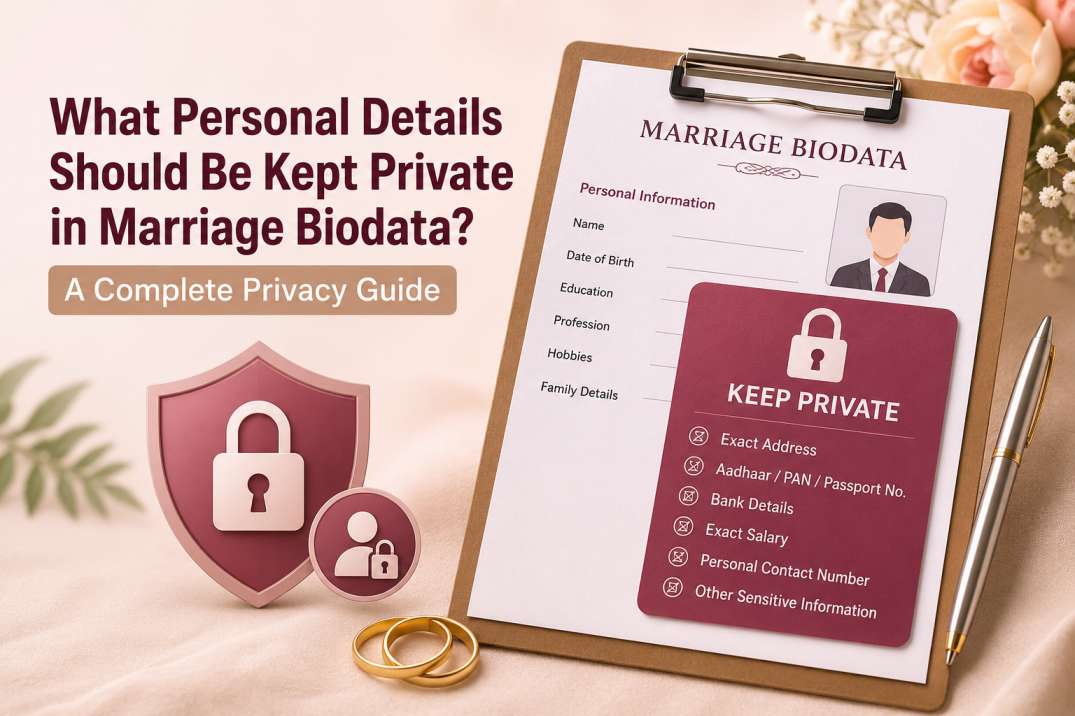
You should keep details like your exact home address, Aadhaar, PAN, passport number, bank details, exact salary, primary phone number, and other sensitive personal information out of your marriage biodata. Share these only after mutual trust has been established.
A marriage biodata is meant to introduce you to a potential match, not reveal every detail about your life. It should highlight your background and compatibility, not serve as an identity document.
Since biodatas are often shared through WhatsApp, email, and family groups, they can easily be forwarded beyond the intended recipient. That's why it's important to be mindful of what you include. Privacy isn't about hiding information — it's about sharing it at the right stage of the marriage process.
Your Marriage Biodata Is a First Impression — Not Your Identity Document
Many families believe that adding more information creates more trust. They think that a detailed biodata looks more genuine and increases the chances of finding a suitable match.
In reality, trust is built through conversations, meetings, and mutual understanding — not by putting every personal detail into a document that may be shared with strangers.
Think of your marriage biodata as an introduction card. It should answer questions like:
- Who are you?
- What do you do?
- Where are you from?
- What are your values and interests?
- What kind of life partner are you looking for?
It should not answer every question someone might eventually ask after both families develop mutual interest.
A good biodata opens the door for meaningful conversations. It shouldn't expose information that could affect your privacy or be misused if the document reaches the wrong hands.
Before You Add Any Detail, Ask Yourself This One Question
Whenever you are about to include a personal detail, pause for a moment and ask yourself:
"If this biodata gets forwarded to 50 unknown people, would I still be comfortable sharing this information?"
This simple question can prevent many common privacy mistakes.
Many people don't intentionally overshare. They simply copy information from old templates or follow what someone else included in their biodata. Unfortunately, many traditional templates were created years ago when biodatas were exchanged only between close family members. Today, most biodatas are digital, making them much easier to copy, forward, download, and store.
Instead of asking, "Should I include this because everyone else does?", ask:
- Is this information necessary for initial compatibility?
- Can I share it later if both families are genuinely interested?
- Does this detail reveal more than it needs to?
If the answer makes you uncomfortable, it probably doesn't belong in your first biodata.
Personal Details You Should Never Mention in Your Marriage Biodata

Some information doesn't belong in an introductory biodata. Keeping these details private isn't dishonest — it's a smart way to protect your privacy until mutual trust is established.
Exact Home Address
Your full address isn't needed during the first introduction. Mentioning your city or general locality is enough.
Good Examples:
- Delhi
- South Delhi
- Jaipur
- Ahmedabad
Avoid Writing:
- Flat or House Number
- Building Name
- Street Name
- Landmark
- PIN Code
Share your complete address only when both families are seriously moving forward.
Government Identity Numbers
Never include government-issued IDs such as:
- Aadhaar Number
- PAN Number
- Passport Number
- Driving Licence Number
- Voter ID Number
These documents are meant for legal verification, not matrimonial introductions. Since biodatas can be forwarded, keep identity documents private and share them only during the final verification stage.
Bank Details, Investments, and Exact Salary
Financial transparency is important, but financial exposure isn't.
Avoid sharing:
- Exact annual salary
- Bank account details
- Mutual fund investments
- Fixed deposits
- Property value
- Loan details
Instead, share a broader picture.
| Instead of This | Share This Instead |
|---|---|
| ₹14,87,654 per year | ₹12–15 LPA |
| Investment portfolio value | Profession and career growth |
| Property worth ₹1.5 crore | Own house (if relevant later) |
A salary range is usually enough for expectation matching while keeping the focus on compatibility rather than finances.
Personal Contact Details
Avoid adding your primary mobile number or personal email address, as your biodata may be shared beyond the intended recipient.
Safer alternatives include:
- A dedicated matrimonial email
- A secondary mobile number
- A parent's or guardian's contact number
This gives you better control over who can contact you.
Private Medical History
Medical honesty matters, but so does timing.
Your first biodata shouldn't include:
- Past surgeries
- Ongoing treatments
- Prescription medicines
- Mental health history
- Detailed medical reports
If there's a serious medical condition that may affect married life, discuss it honestly once both families have developed genuine interest — not through an introductory biodata.
Children's or Family Members' Sensitive Information
Your biodata should introduce you, not your entire family.
Avoid including:
- Father's personal phone number
- Mother's email address
- Brother's workplace
- Sister's school or college
- Complete family address
General family details, such as parents' occupations and the number of siblings, are sufficient at this stage.
Daily Routine That Reveals Your Location
Seemingly harmless details can reveal your daily movements.
For example:
- "I leave my office at 9 PM."
- "I work on the 14th floor of XYZ Tower."
- "I stay in ABC Girls Hostel."
- "I travel alone every weekend."
Your profession and city are enough. Avoid sharing information that reveals where or when you can usually be found.
Should You Add Social Media Links?
Adding Instagram, Facebook, or LinkedIn is optional.
While social profiles can showcase your personality and interests, they may also reveal:
- Daily routine
- Travel history
- Family photos
- Friends and relatives
- Personal opinions
- Contact information
If you decide to share your profiles, review your privacy settings first. Many people prefer sharing social media only after a few conversations, which is generally the safer approach.
The Details You Should Share Instead
Removing sensitive information doesn't mean your biodata becomes incomplete. It simply means you're sharing information that's relevant at the right stage.
| Instead of Revealing | Share This Initially | Why It Helps |
|---|---|---|
| Full house address | City or general locality | Gives location without exposing your residence. |
| Exact salary | Salary range | Helps with expectations while protecting financial privacy. |
| Primary phone number | Secondary number or email | Gives you more control over communication. |
| Government IDs | Do not include | These are needed only for later verification. |
| Complete asset details | Profession and career | Keeps the focus on compatibility rather than wealth. |
| Exact birth time (unless specifically required later) | Age or date of birth | Sufficient for initial introductions. |
The goal is simple: share enough to build interest, but not so much that you lose control over your personal information.
Also Read: What Families Really Notice First in a Marriage Biodata (Before Reading Anything Else)
When Is the Right Time to Share Private Information?
Instead of revealing everything on day one, think of marriage discussions as a gradual process.
Stage 1 — Marriage Biodata
Share only basic details like your age, education, profession, city, hobbies, family background, and marriage expectations. Keep sensitive information private.
Stage 2 — Mutual Family Interest
Once both families show genuine interest, you can share horoscope details (if applicable), career plans, and lifestyle preferences.
Stage 3 — Personal Meetings
Discuss personal topics such as health, financial planning, future goals, and life expectations after trust has developed.
Stage 4 — Final Discussions
Share identity documents, your complete address, and other verification or legal documents only when both families have decided to move forward.
This approach protects your privacy while allowing trust to grow naturally.
Hidden Privacy Mistakes Most People Don't Notice
Even if your written information is limited, your biodata can still reveal more than you realise.
Before sharing it, check for these commonly overlooked mistakes:
- Photos showing your house name or apartment number.
- Car or bike registration plates.
- Office ID cards or company badges.
- School or college uniforms in family photos.
- Wedding invitation cards visible in the background.
- Original photos that still contain hidden location information.
- PDF file names like PriyaSharmaAadhaarFinal.pdf or RahulPassportBiodata.pdf.
Use a simple file name such as Priya_Sharma_Marriage_Biodata.pdf or Rahul_Profile.pdf instead.
Small changes like these can significantly reduce unnecessary exposure.
If You're Sending Your Biodata on WhatsApp, Read This First
WhatsApp makes sharing easy — but it also makes forwarding easy.
A biodata sent to one relative can quickly be forwarded to extended family groups, community circles, or friends you've never met. Even if someone deletes a message later, screenshots, downloaded files, or backups may still exist.
Before sending your biodata:
- Export it as a clean PDF.
- Share it only with trusted contacts.
- Update older versions instead of circulating multiple copies.
- Avoid sending unnecessary supporting documents with the first message.
Treat your biodata as you would any personal document — with care, not casually.
Privacy vs Transparency: Finding the Right Balance
Many people worry that keeping some information private may make them appear secretive. The opposite is often true.
Privacy is a sign that you understand healthy boundaries in the digital world. Honest families appreciate transparency, but they also respect that trust develops over time.
Being private doesn't mean you're hiding facts. It means you're choosing the right time to share them.
Create a Marriage Biodata Without Revealing More Than Necessary
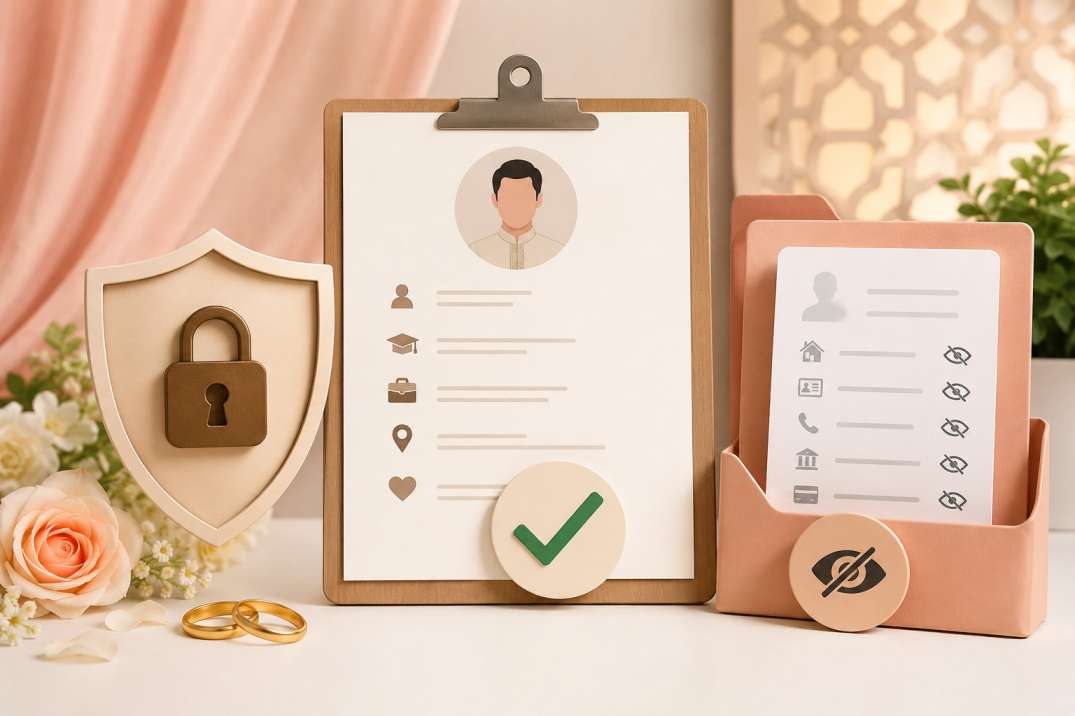
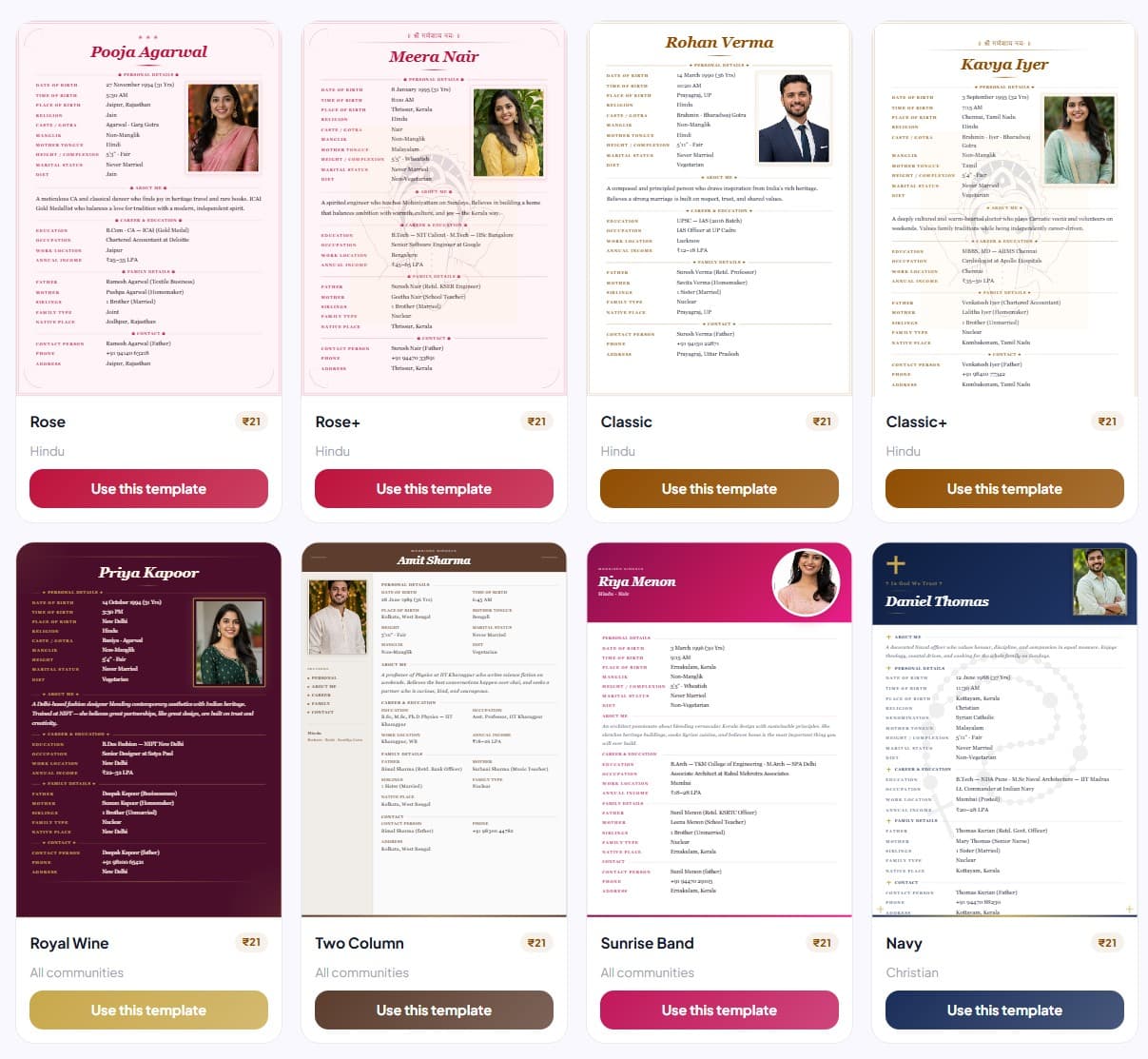
Many traditional biodata templates unintentionally encourage oversharing by making fields like your complete address, exact salary, or personal contact details feel mandatory.
At BiodataPlus, we designed our platform differently. You stay in control of what appears in your biodata, so you can create a professional profile without sharing more than you're comfortable with.
With BiodataPlus, you get:
- Optional fields for sensitive information
- Free marriage biodata templates in 17 designs
- Clean, professional designs without awkward blank spaces
- Easy editing whenever your details change
- The flexibility to reveal only what you choose
Whichever of our free designs you use, our goal is the same — helping you create a beautiful marriage biodata while protecting your privacy.
A good marriage biodata should introduce who you are, not expose information that can be shared later as trust grows.
Also Read: Regional Language vs English Marriage Biodata: Which One Should You Choose?
Conclusion
Your marriage biodata should create the right first impression — not expose information that belongs in later conversations. The more control you have over what you share, the safer and more confident you'll feel while connecting with potential matches.
At BiodataPlus, we make that easy with privacy-friendly free marriage biodata templates where sensitive fields are optional. You decide what to include, while we help you create a clean, professional, and impressive biodata.
Create your privacy-friendly marriage biodata with BiodataPlus today and share your story — not your sensitive information.