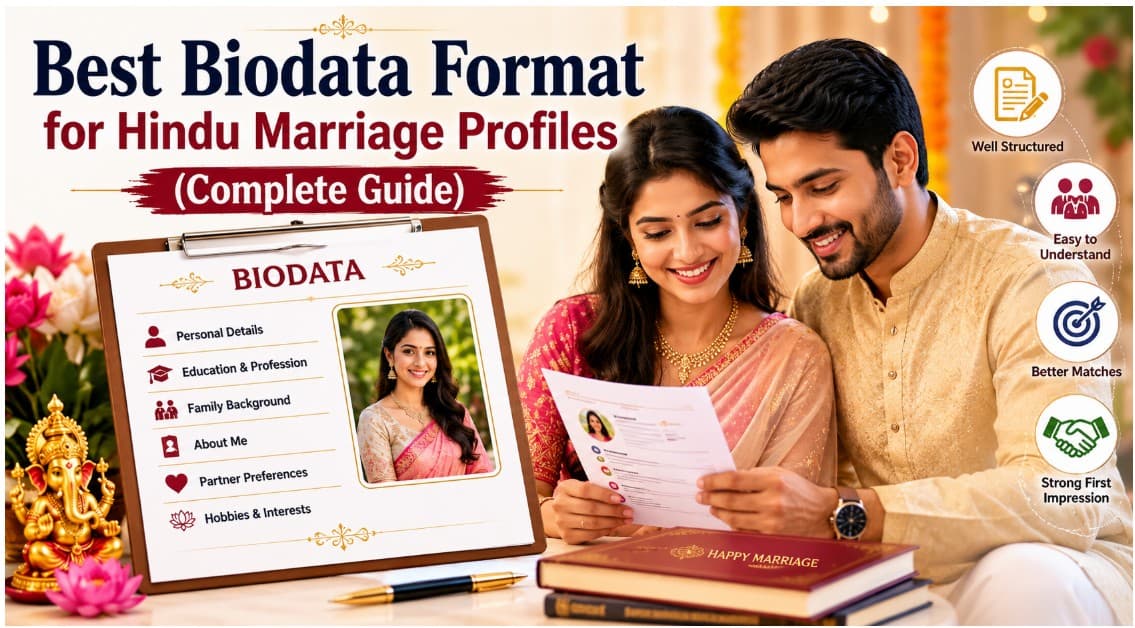
The best biodata format for Hindu marriage profiles includes personal details, family background, education, profession, lifestyle preferences, religious or astrological information, and partner expectations arranged in a clear, easy-to-read structure. A well-organised format helps families quickly understand your background, values, and compatibility before any conversation takes place.
A Hindu marriage biodata is a formal matrimonial profile shared during the arranged marriage process. Unlike a job resume, it presents a complete picture of your personal life, family roots, education, career, cultural background, and future expectations.
Because a biodata often creates the first impression, its structure matters as much as the information itself. A cluttered or outdated profile can make important details easy to miss, while a professionally organised biodata builds trust and makes the matchmaking process smoother for both families.
Why a Good Biodata Format Matters
Many families review dozens of profiles every week. If your information is scattered, difficult to read, or incomplete, important details may be overlooked.
A professionally structured biodata helps because:
- It creates a strong first impression.
- It saves time for both families.
- It makes compatibility assessment easier.
- It demonstrates sincerity and transparency.
- It increases the likelihood of meaningful responses.
One common mistake is treating a marriage biodata like a life story. Instead of writing long paragraphs about yourself, organise information into clear sections that can be understood within a few minutes.
Think of your biodata as a conversation starter rather than a complete autobiography.
Best Biodata Format Structure for Hindu Marriage Profiles
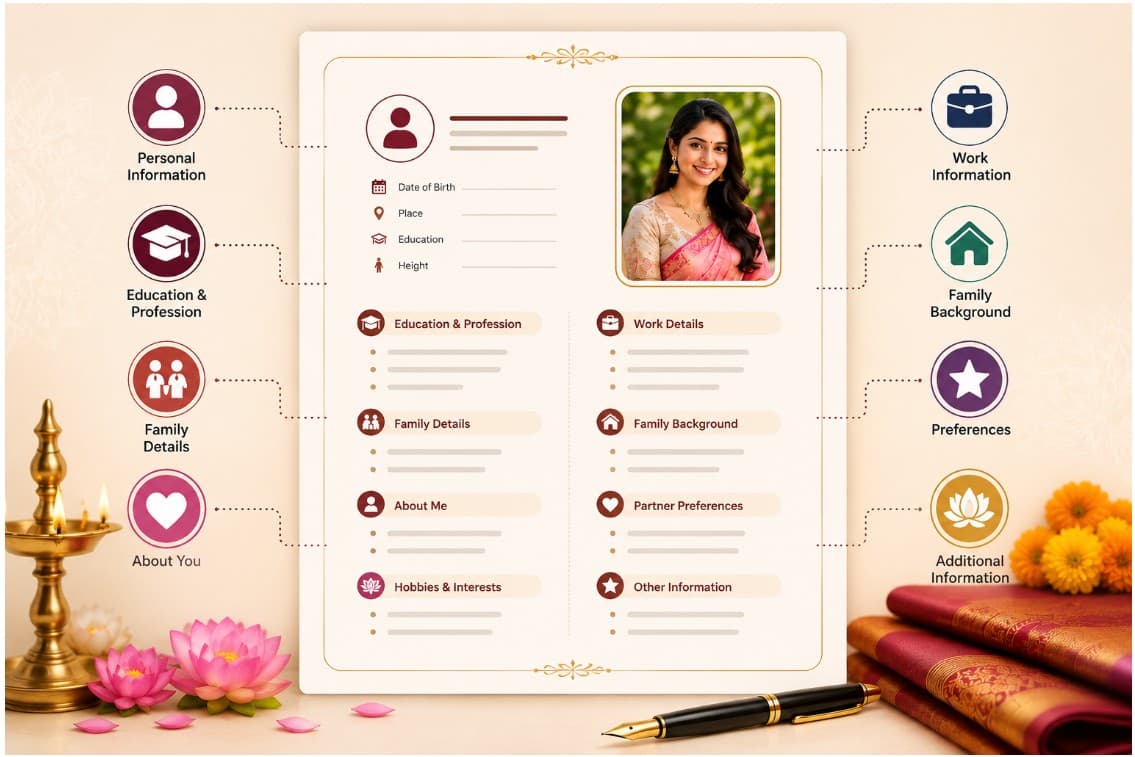
The most effective Hindu marriage biodata format follows a logical structure that allows readers to quickly find important information.
A. Profile Header
This section should appear at the top of your biodata.
Include:
- Full Name
- Recent Photograph
- Age
- Gender
Your photograph should be clear, recent, and professionally presented. Avoid heavily filtered images, casual group photos, or cropped social media pictures.
B. Personal Information
This section forms the foundation of your profile.
Include:
- Date of Birth
- Age
- Height
- Weight (Optional)
- Blood Group (Optional)
- Religion
- Caste/Sub-Caste
- Gotra (If Applicable)
- Mother Tongue
- Current City and State
For many Hindu families, caste, community, and gotra continue to play an important role in the matchmaking process. Including these details early helps avoid confusion later.
C. Education Details
Educational qualifications provide insight into your academic background and career journey.
Include:
- Highest Qualification
- College or University Name
- Additional Certifications
- Special Achievements (if relevant)
You do not need to provide every academic detail from school onwards. Focus on your highest qualifications and credentials that accurately represent your educational background.
D. Career Information
Career information is particularly important in modern Hindu matrimony.
Include:
- Occupation
- Designation
- Company Name
- Work Location
- Annual Income (Optional)
Should salary be included?
The answer depends on personal preference and family expectations. Many families appreciate transparency regarding financial stability, while others prefer discussing income privately during later conversations.
E. Family Background
This is one of the most influential sections in a Hindu marriage biodata.
Include:
Father
- Name
- Occupation
Mother
- Name
- Occupation
Siblings
- Married or Unmarried
- Profession
Family Information
- Nuclear or Joint Family
- Family Values
- Cultural Background
Instead of lengthy descriptions, keep family information concise and easy to scan. Families often use this section to understand the environment and values in which you were raised.
F. Religious and Astrological Details
Astrological compatibility remains important in many Hindu communities.
You may include:
- Rashi
- Nakshatra
- Gotra
- Manglik Status
- Horoscope Availability
- Birth Time
- Birth Place
Many families appreciate seeing these details up front because it streamlines horoscope matching discussions. However, this section can be adjusted based on your personal preferences and family traditions.
G. Lifestyle Information
Modern compatibility extends beyond education and family background.
Consider including:
- Food Preferences
- Smoking Habits
- Drinking Habits
- Fitness Interests
- Hobbies
- Travel Interests
- Work-Life Balance Preferences
This section often reveals more about daily life compatibility than formal qualifications.
H. Partner Preferences
One of the most overlooked sections in marriage biodata formats is partner expectations.
Include:
- Preferred Age Range
- Educational Qualifications
- Profession
- Location Preferences
- Lifestyle Expectations
- Family Values
The key is realism. Clear and reasonable expectations help attract compatible matches and reduce unnecessary discussions.
Traditional vs Modern Hindu Marriage Biodata
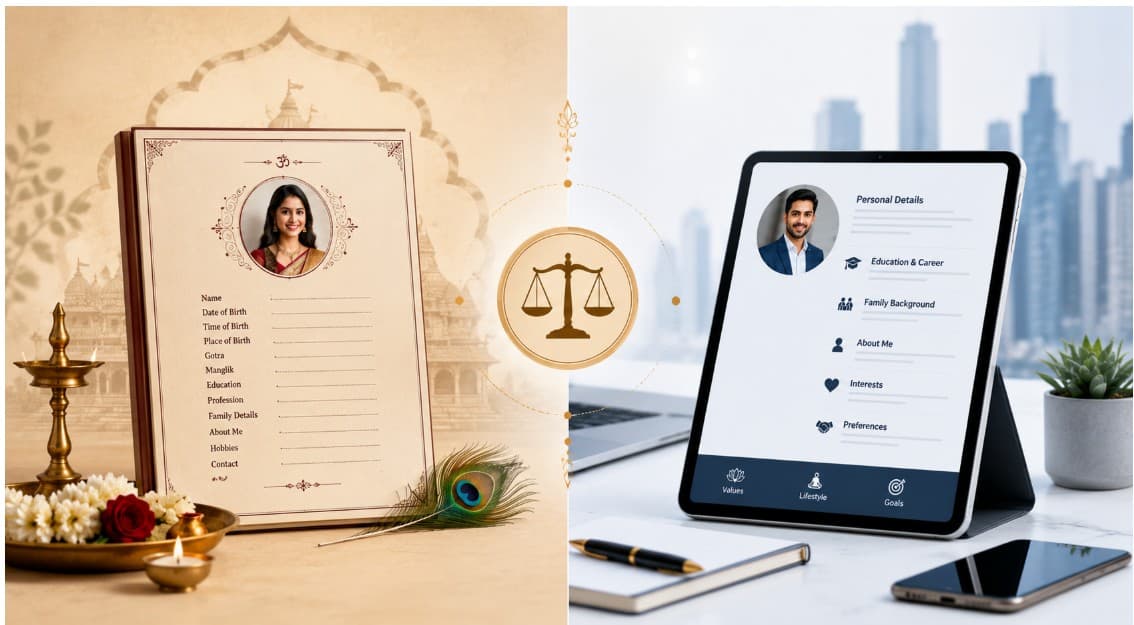
Marriage biodata formats have evolved significantly over the years.
| Feature | Traditional Format | Modern Format |
|---|---|---|
| Main Focus | Family background and community | Personality and compatibility |
| Horoscope Details | Extensive | Basic or optional |
| Family Information | Detailed | Concise and focused |
| Career Details | Secondary | Highly important |
| Design Style | Plain text | Clean and visually organised |
| Lifestyle Information | Minimal | Often included |
Traditional families may prioritise lineage, caste, gotra, and horoscope matching. Modern families often place greater emphasis on career aspirations, lifestyle compatibility, and personal values.
The most effective biodata today combines the strengths of both approaches.
Biodata Format for Hindu Groom
Families evaluating a groom's profile often look for indicators of stability, responsibility, and future planning.
Important areas to highlight include:
- Educational achievements
- Career growth
- Professional stability
- Family background
- Lifestyle habits
- Long-term goals
Property ownership and assets may be mentioned if relevant, but avoid turning your biodata into a financial statement. Focus on presenting a balanced picture of your life and values.
Biodata Format for Hindu Bride
Modern marriage biodata formats for brides should focus on individuality as well as family background.
Key areas include:
- Educational qualifications
- Career aspirations
- Personal interests
- Family values
- Lifestyle preferences
- Future goals
Avoid outdated assumptions that limit the profile to traditional expectations. Today's families increasingly value education, independence, compatibility, and shared life goals.
Regional Variations in Hindu Marriage Biodata
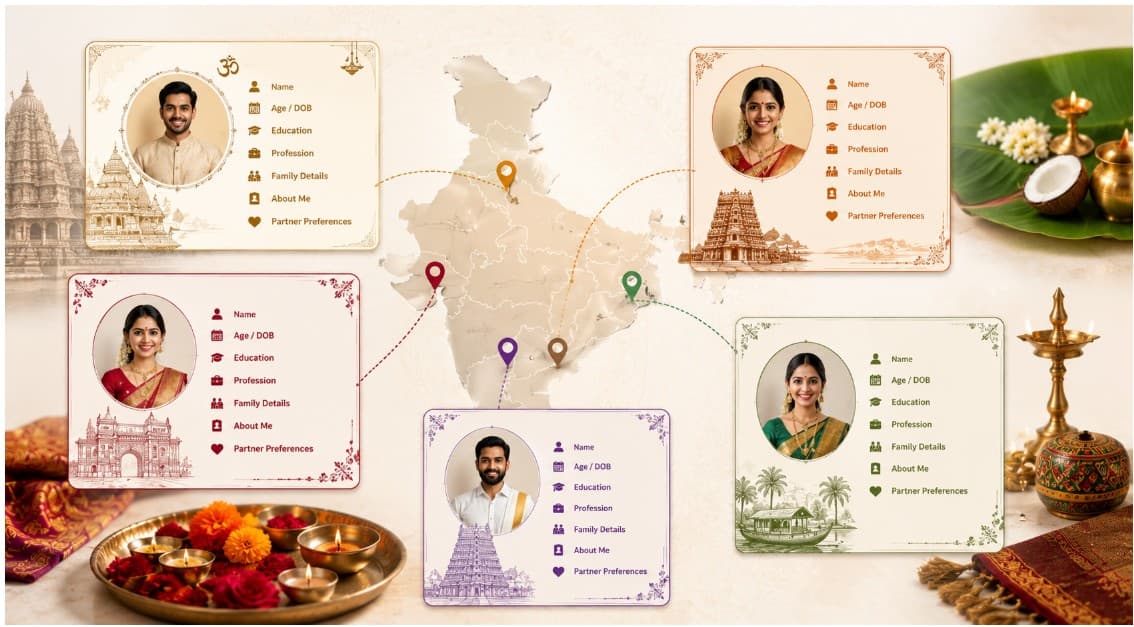
Many families are unaware that biodata expectations can vary across regions and communities.
North Indian Families
North Indian families often pay close attention to:
- Gotra
- Manglik status
- Community matching
- Family background
South Indian Families
South Indian matrimonial biodatas frequently include:
- Exact birth time
- Birth place
- Horoscope details
- Gothram information
Gujarati Families
Many Gujarati families prefer information about:
- Family business background
- Native place
- Community details
- Cultural traditions
Marathi Families
Marathi profiles may emphasise:
- Family values
- Educational background
- Native roots
- Community compatibility
Bengali Families
Bengali families often focus on:
- Education
- Cultural interests
- Family traditions
- Ancestral background
Understanding these preferences helps you create a biodata that aligns with your family's expectations while remaining authentic.
Online Matrimony vs Offline Family Introductions
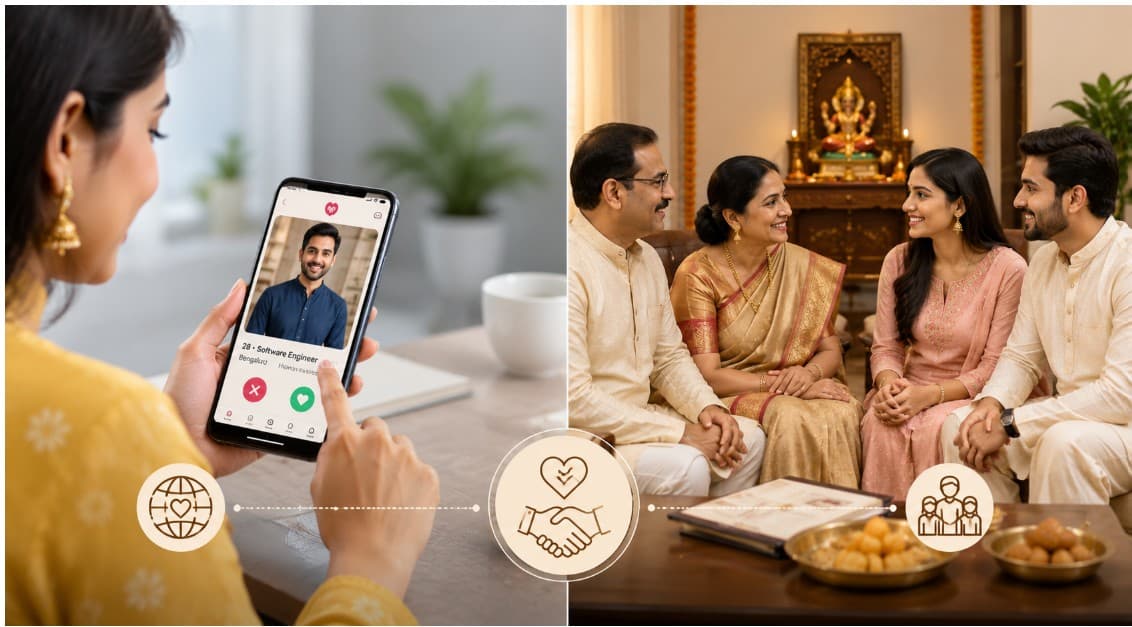
The way biodata is shared has changed dramatically.
| Online Matrimony | Offline Family Introductions |
|---|---|
| Platform-based profiles | Direct biodata sharing |
| Limited fields | Flexible format |
| Searchable database | Personal introductions |
| Public visibility | Controlled sharing |
Because many introductions now happen through WhatsApp and email, mobile-friendly PDF biodatas have become increasingly important.
One-Page vs Two-Page Biodata
Many people ask whether a marriage biodata should be one page or two.
A one-page biodata works best when:
- Information is concise
- You prefer quick sharing
- The profile is highly summarised
A two-page biodata works best when:
- Additional family details are important
- Horoscope information is included
- You want to provide more context
The goal is clarity, not page count. Read more about one-page vs two-page biodata.
PDF vs Word Biodata: Which Is Better?
PDF remains the preferred format for sharing marriage biodatas.
Advantages of PDF:
- Consistent formatting
- Better mobile viewing
- Professional appearance
- Easy WhatsApp sharing
- Prevents accidental edits
Word documents often display differently across devices, which can affect presentation. See our full comparison: marriage biodata Word format vs PDF.
Biodata Design Trends in 2026
Marriage biodata design has become more sophisticated.
Popular trends include:
- Minimalist layouts
- Mobile-friendly PDFs
- Elegant typography
- Structured information blocks
- Digital biodata cards
- QR-enabled profiles
- Modern professional templates
Families increasingly expect biodata that are both informative and visually organised.
This is one area where many people struggle. Formatting sections like Gotra, Rashi, family details, partner preferences, and photographs neatly inside a Word document can become frustrating very quickly.
Create Your Hindu Marriage Biodata Without the Formatting Hassle
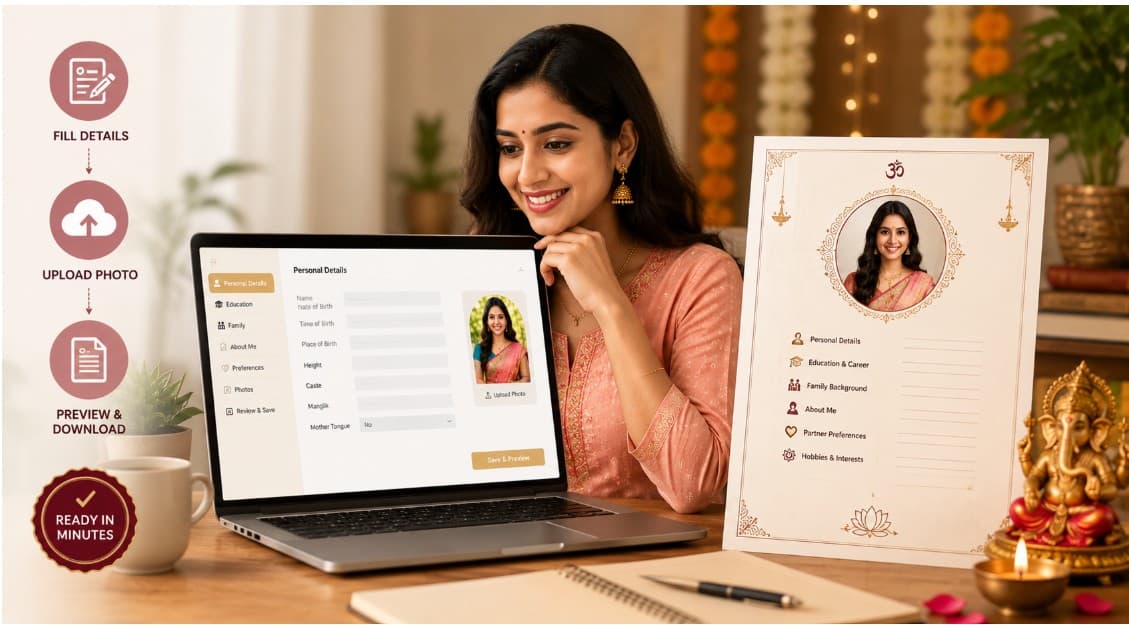
Creating a marriage biodata in Word or designing one from scratch can quickly become time-consuming, especially when you need to organise personal details, family information, horoscope data, partner preferences, and photographs in a professional layout.
At BiodataPlus, we help simplify the entire process. Our platform offers free Hindu marriage biodata templates designed to balance traditional matrimonial requirements with modern presentation standards. You can simply enter your details, choose a design that suits your preferences, and generate a polished, share-ready PDF within minutes.
Whether you want a simple marriage biodata format or a premium matrimonial profile with a more refined design, our platform helps you create a professional biodata without worrying about formatting, alignment, or design challenges.
Common Mistakes to Avoid
Here are some mistakes that frequently reduce the effectiveness of a marriage biodata.
Overloading Information
Too much detail can overwhelm readers. Focus on relevant information.
Poor Photo Quality
A blurred or outdated photograph creates a weak first impression.
Grammar and Formatting Errors
Small mistakes can make an otherwise strong profile appear careless.
Hiding Important Information
Transparency builds trust. Omitting major details often causes problems later.
Outdated Design
Dense text blocks and cluttered layouts are difficult to read.
Unrealistic Expectations
Overly restrictive partner preferences can significantly reduce compatibility opportunities.
Tips to Make Your Marriage Biodata Stand Out
A strong biodata does not need exaggeration. It needs clarity.
Consider these practical tips:
- Use a clean, structured layout.
- Include a recent professional photograph.
- Keep information accurate and updated.
- Highlight strengths naturally.
- Use readable fonts.
- Focus on authenticity.
- Balance tradition and modern expectations.
- Make the document mobile-friendly.
Most importantly, write with honesty. Genuine profiles create better conversations and more meaningful matches.
Hindu Marriage Biodata Final Checklist
Before sharing your biodata, confirm that you have included:
✓ Personal Details
✓ Recent Photograph
✓ Education Information
✓ Career Details
✓ Family Background
✓ Religious Information
✓ Horoscope Details (if applicable)
✓ Lifestyle Preferences
✓ Hobbies and Interests
✓ Partner Expectations
✓ Contact Information
If you want to avoid manual formatting and design challenges, BiodataPlus allows you to complete this checklist inside professionally designed templates and instantly generate a share-ready PDF.
Conclusion
A strong Hindu marriage biodata combines the traditional fields families expect — gotra, Manglik status, horoscope details — with a clean, professional presentation that is easy to read on mobile. The best biodata is not the longest one; it is the clearest one. Organise your information logically, use a structured template, and keep the focus on authenticity over impression management. Browse Hindu marriage biodata templates or explore all community formats to find the right design for your family.
Also Read: Marriage Biodata Photo Guide